Electrify America Unveils Advanced EV Charging Stations with Battery Backup Capability
June 18, 2026
Share
Key Takeaways
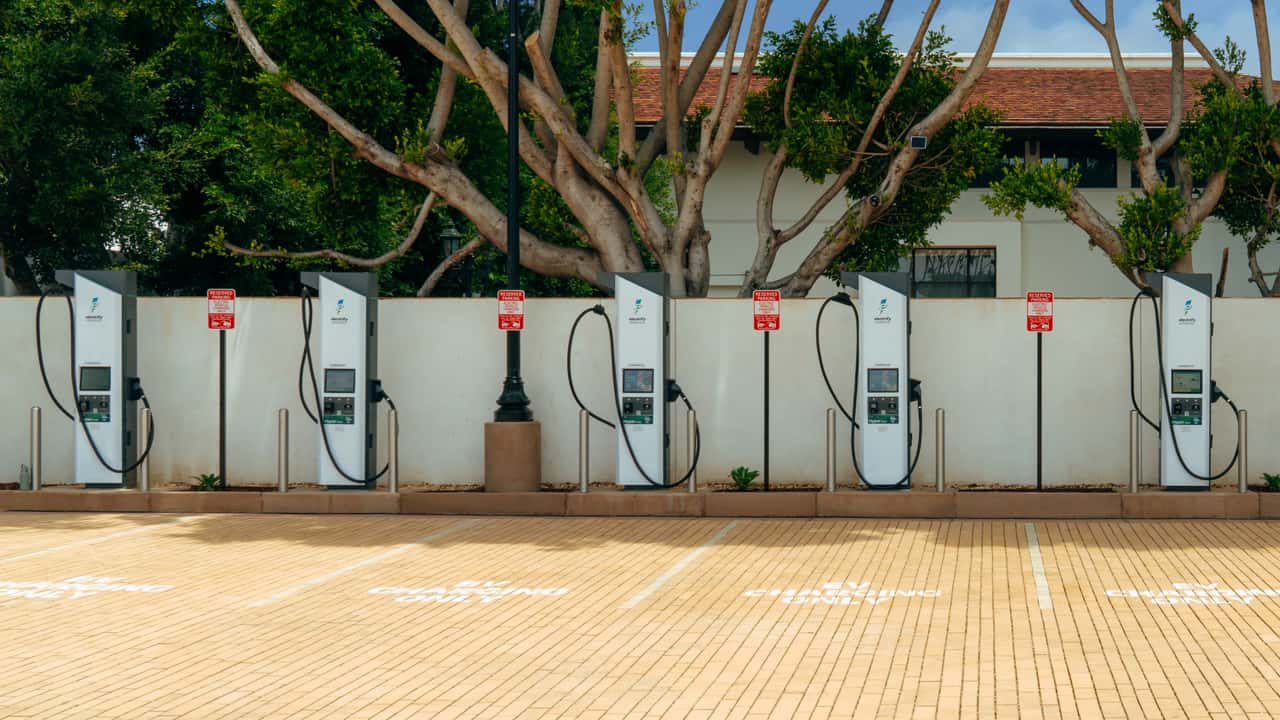
Electrify America has launched a new large-format EV charging site in Santa Barbara, California, featuring 20 stalls with up to 350 kilowatts of power and a significant battery energy storage system, showcasing advancements in EV charging infrastructure that may soon be available in Canada.
The site's technology allows for high-power charging while reducing strain on the grid, and similar initiatives are being invested in by Canadian companies like Petro-Canada and Ivanhoe Cambridge, with fast-charging technology being deployed across the country.
The development of efficient and reliable EV charging infrastructure is crucial to meeting the Canadian government's target of 100% zero-emission new light-duty vehicle sales by 2035, with advancements in charging technology and expansions in infrastructure expected to drive further investment and growth in the Canadian EV market.
Electrify America Opens Latest-Generation EV Charging Site in California
Electrify America, a leading DC fast charging network for electric vehicles in the United States, has launched its newest large-format station in Santa Barbara, California. Although this development is south of the border, it highlights the advancements in EV charging infrastructure that Canadian drivers can look forward to. The site features a minimum of 20 stalls, each capable of delivering up to 350 kilowatts of power, as well as a significant battery energy storage system. This technology allows the station to store energy during periods of low usage and release it during peak demand, reducing strain on the grid and expanding charging capacity.
Implications for Canadian EV Drivers
While Electrify America's network is primarily focused on the US market, Canadian EV owners can benefit from similar initiatives in Canada. The Canadian government's iZEV incentives and various provincial rebates, such as those offered in British Columbia and Quebec, have encouraged the adoption of electric vehicles. As the demand for EVs grows, the need for reliable and efficient charging infrastructure becomes increasingly important. Canadian companies, such as Petro-Canada and Ivanhoe Cambridge, are investing in EV charging stations across the country, with some locations featuring fast-charging technology similar to Electrify America's.
Advancements in Charging Technology
The Santa Barbara station is Electrify America's first large-format site to feature a 1.9-megawatt battery, the largest deployed by the company to date. This technology enables the station to provide high-power charging while reducing its reliance on the grid. For Canadian EV drivers, this means that similar advancements in charging technology could soon be available, making long-distance travel and daily commuting more convenient. With the Canadian government aiming to have 100% of new light-duty vehicle sales be zero-emission by 2035, the development of efficient and reliable charging infrastructure is crucial to meeting this target.
Expansion of EV Charging Infrastructure
Electrify America's large-format stations, with at least 20 bays, can significantly reduce wait times for EV drivers. The company currently operates over 1,149 DC fast charging stations in the US, with more than 5,700 individual fast-charging ports. As the EV market continues to grow in Canada, drivers can expect to see similar expansions in charging infrastructure, including the deployment of fast-charging technology and battery energy storage systems. With Canadian pricing for EVs becoming increasingly competitive, thanks in part to government incentives, the demand for convenient and efficient charging solutions is likely to drive further investment in this area.