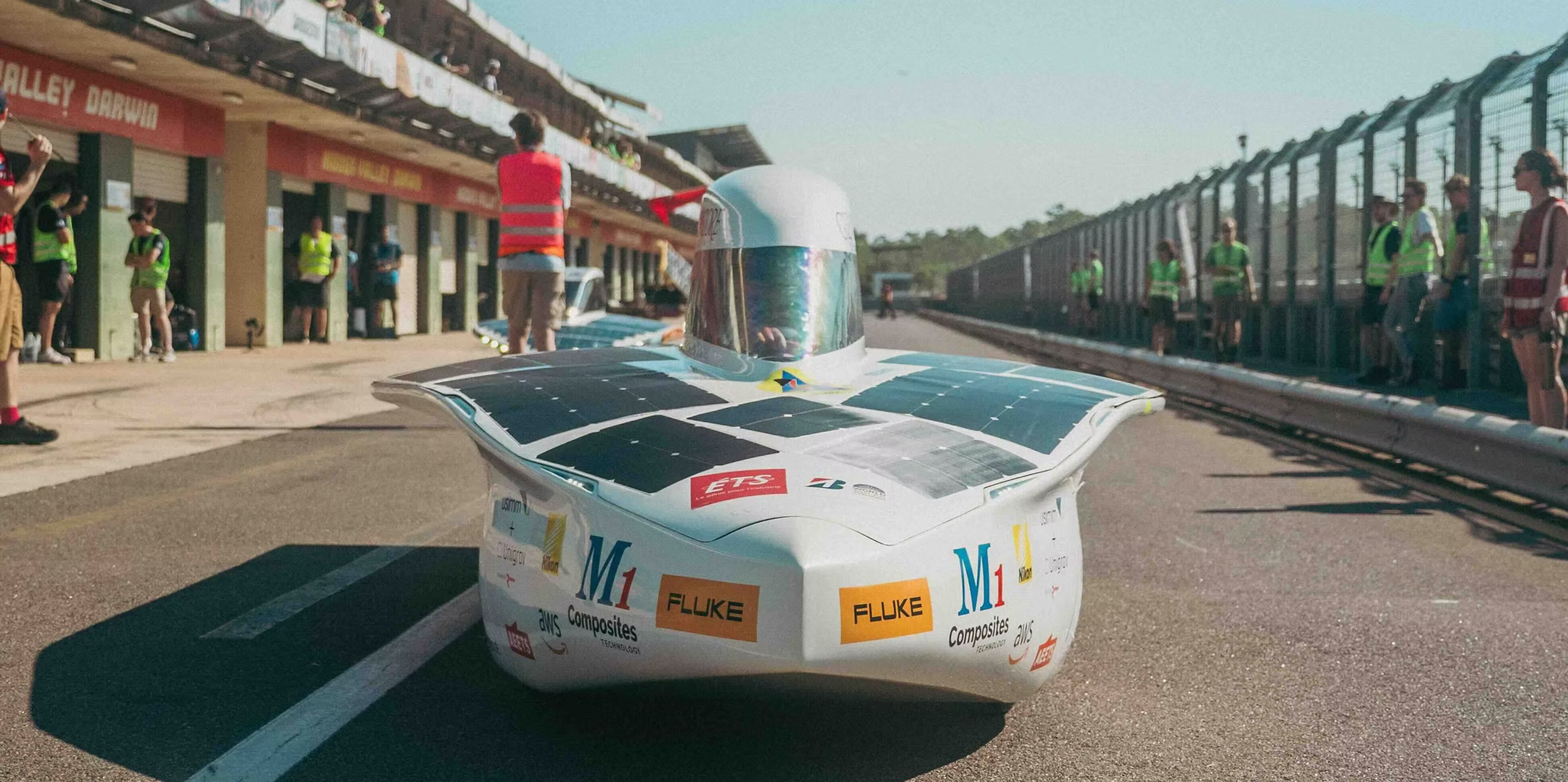
Canadian Solar Car Team Prepares for 2026 American Solar Challenge
June 26, 2026
Share
Key Takeaways
The Canadian solar car team Éclipse from École de technologie supérieure (ÉTS) in Montreal is set to compete in the 2026 Electrek Formula Sun Grand Prix (FSGP) and American Solar Challenge (ASC) in Minnesota, leveraging their 33 years of experience in building solar cars and electric vehicles (EVs).
Éclipse's new car, Éclipse 12, features a revolutionary three-wheel tadpole design, improved array cooling system, and a lighter and more efficient design, making it a strong contender for the upcoming races and showcasing innovative EV technology.
The FSGP and ASC will feature rule changes, including an increased solar panel limit and reduced battery size, which will provide teams with 50% more energy to utilize and require them to adapt and optimize their strategies to maximize their energy output in the electric vehicle (EV) competition.
The innovations and technologies developed by Canadian teams like Éclipse have broader implications for the Canadian electric vehicle (EV) market, informing and accelerating the development of more efficient and sustainable EV technologies, and contributing to Canada's EV ecosystem and infrastructure.
The expertise and knowledge gained through solar car racing can be applied to real-world EV applications, making Canadian teams like Éclipse an important part of the country's EV industry, with potential impacts on Canadian EV pricing, availability, and adoption.
Canadian Solar Car Team Heads to Minnesota for Prestigious Racing Events
This July, the 2026 Electrek Formula Sun Grand Prix (FSGP) and American Solar Challenge (ASC) will take place in Minnesota, featuring top solar car teams from around the world, including Canada's own Éclipse team from École de technologie supérieure (ÉTS) in Montreal. With over 33 years of experience in building solar cars, Éclipse is a seasoned competitor, having been involved in the sport since 1992. The team's captain, Yohann Gourmelen, recently shared insights into their new car, Éclipse 12, and the rule changes that will impact this year's races.
A Unique Approach to Building Solar Cars
What sets Éclipse apart is their ability to build nearly an entire solar car in-house, leveraging the advanced student club workshop at ÉTS, one of the most renowned engineering-only colleges in North America. By designing and manufacturing most components themselves, including printed circuit boards, battery packs, and fabrication, the team reduces costs, lead times, and gains full control over the final product. This approach is made possible by the technical expertise of ÉTS students, who arrive with a strong foundation in machining, electronics, and shop floor management. As Yohann notes, "If you design it, you're gonna build it," allowing the team to rapidly prototype and test new ideas.
Innovations and Improvements in Éclipse 12
The new Éclipse 12 car features a revolutionary three-wheel tadpole design, with two wheels at the front and a single driven wheel at the back, providing improved weight distribution and aerodynamics. This design change, inspired by the World Solar Challenge, allows for a more symmetrical car that is easier to build and maintain. Additionally, the team has made significant improvements to the array cooling system, reducing heat buildup and increasing energy efficiency. These innovations, combined with a lighter and more efficient design, make Éclipse 12 a strong contender for the upcoming races.
Rule Changes and Their Impact on the Competition
This year, the FSGP and ASC will feature rule changes, including an increased solar panel limit from four to six square meters, and a reduced battery size. These changes will provide teams with 50% more energy to utilize, making the competition even more exciting. As Yohann notes, "It's 50% more energy we get to spend," which will require teams to adapt and optimize their strategies to maximize their energy output. For Canadian teams like Éclipse, these changes will be particularly relevant, as they will need to balance their energy usage with the unique challenges of racing in North America, including the Canadian climate and road conditions.
Canadian Context and Relevance
While the FSGP and ASC are US-based events, the innovations and technologies developed by Canadian teams like Éclipse have broader implications for the Canadian electric vehicle (EV) market. As Canada continues to invest in EV infrastructure and incentives, such as the iZEV program, which offers rebates for eligible EV purchases, the work of teams like Éclipse can inform and accelerate the development of more efficient and sustainable EV technologies. Furthermore, the expertise and knowledge gained through solar car racing can be applied to real-world EV applications, making Canadian teams like Éclipse an important part of the country's EV ecosystem. With their unique approach to building solar cars and their commitment to innovation, Éclipse is poised to make a significant impact in the world of solar car racing and beyond.