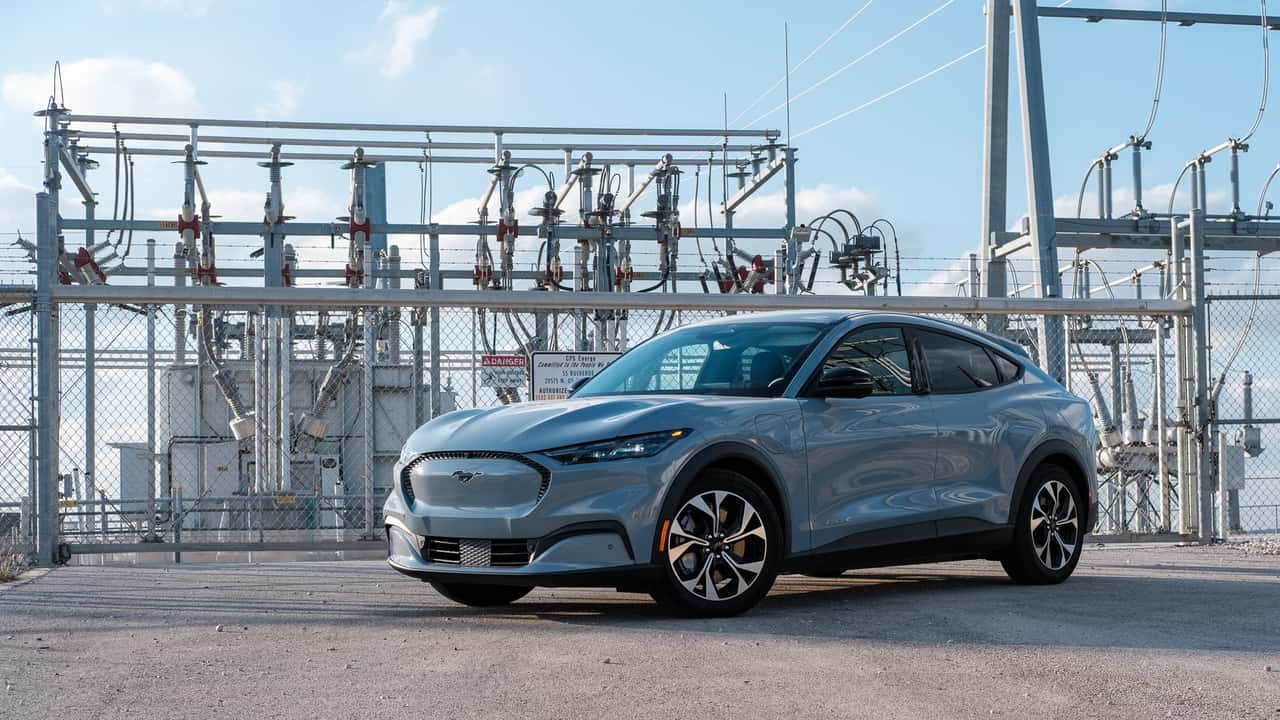
Ford Mustang Mach E Sticking with Current Electric Vehicle Platform
June 23, 2026
Share
Key Takeaways
The Ford Mustang Mach-E's future is uncertain as the company shifts focus to its new Universal EV platform, which will bring improvements in efficiency, range, and performance to future electric vehicle models, potentially impacting Canadian EV sales.
The Mustang Mach-E will not be transitioning to the Universal EV platform, with year-over-year sales in the US declining by nearly half, and less than 10,000 units sold through May, sparking concerns about its long-term viability in the Canadian EV market.
Canadian buyers can still purchase the current generation of the Mach-E, priced starting at around $50,000, making it eligible for the iZEV incentive and provincial rebates, but may soon see new EV models from Ford with improved range, performance, and features.
Ford Mustang Mach-E's Future in Question as Company Shifts Focus to Universal EV Platform
The Ford Mustang Mach-E, a pioneering electric vehicle (EV) from a legacy automaker, has been holding its own in the Canadian market, with many buyers considering it as a viable alternative to the Tesla Model Y. Although it has not managed to surpass the popularity of its main rival, the Mach-E has been relatively successful, with Canadian pricing starting at around $50,000, making it eligible for the iZEV incentive and various provincial rebates. However, with its introduction dating back almost seven years, the Mach-E is starting to show its age, and its year-over-year sales in the US have declined by nearly half, with less than 10,000 units sold through May.
No Universal EV Platform for the Mustang Mach-E
According to Ford's Q&A section, the Mustang Mach-E will not be transitioning to the company's new Universal EV (UEV) platform, which is designed to underpin the next phase of Ford's electric vehicle strategy. This platform is expected to bring improvements in efficiency, range, and overall performance, making it an attractive option for future EV models. The UEV architecture is not limited to pickups, but will also support SUVs and vans, providing a flexible and cost-effective solution for Ford's EV lineup. Although the UEV platform is not an 800-volt platform, it is expected to offer significant improvements over the current GE1 platform used in the Mach-E.
Future of the Mach-E Remains Uncertain
Ford CEO Jim Farley has expressed his dissatisfaction with the company's first-generation EVs, including the F-150 Lightning and the Mustang Mach-E, stating that they were "designed the wrong way." Farley believes that the company has gained valuable insight into customer preferences and is now better equipped to design EVs that meet their needs. While this does not necessarily mean that the Mach-E will be discontinued, it does cast doubt over its future. Ford may choose to give the Mach-E a next-generation update based on its current architecture or explore alternative platforms, such as those used by other manufacturers like Volkswagen or Renault.
Canadian Implications and Availability
As Ford shifts its focus to the UEV platform, Canadian buyers may be wondering what this means for the availability of the Mach-E in the Canadian market. With the current generation of the Mach-E still available in Canada, buyers can take advantage of the iZEV incentive and provincial rebates, making it a more affordable option. However, with the UEV platform on the horizon, it is likely that Ford will introduce new EV models in the Canadian market, potentially offering improved range, performance, and features. As the EV landscape continues to evolve, Canadian buyers can expect to see more options and incentives, making it an exciting time for those considering an electric vehicle purchase.