Mercedes Achieves Impressive Fuel Efficiency Hauling 36 Tons in German Winter Conditions
June 27, 2026
Share
Key Takeaways
Mercedes-Benz has released real-world data from 80 of its deployed electric semi trucks, demonstrating the viability of electric long-haul transport in Canada with reduced greenhouse gas emissions and operating costs.
A notable example of an eActros 600 electric truck achieves a daily mileage of around 600 kilometres, reducing greenhouse gas emissions by 90 metric tons of CO2e annually and saving over €4,000 per month in tolls, making it an attractive option for Canadian fleets.
The Canadian government's iZEV incentives and provincial rebates, combined with the investment in public charging infrastructure, are making the adoption of electric semi trucks more economically viable, with the eActros trucks achieving an impressive 1.61 kWh/mile efficiency comparable to the Tesla Semi.
Electric Semi Trucks Prove Viability in Real-World Operations
Electric semi trucks are gaining traction on Canadian roads, with many fleets considering the switch to reduce their environmental footprint and operating costs. However, myths about range, charging infrastructure, and economic viability persist. To combat these misconceptions, Mercedes-Benz has released real-world data from 80 of its deployed electric semi trucks, demonstrating the viability of electric long-haul transport in today's market. The data, which covers thousands of trips, charging cycles, and millions of kilometres, shows that electric trucks can operate reliably and efficiently, even in demanding conditions.
Real-World Example: Electric Truck Saves 90 Metric Tons of CO2e Annually
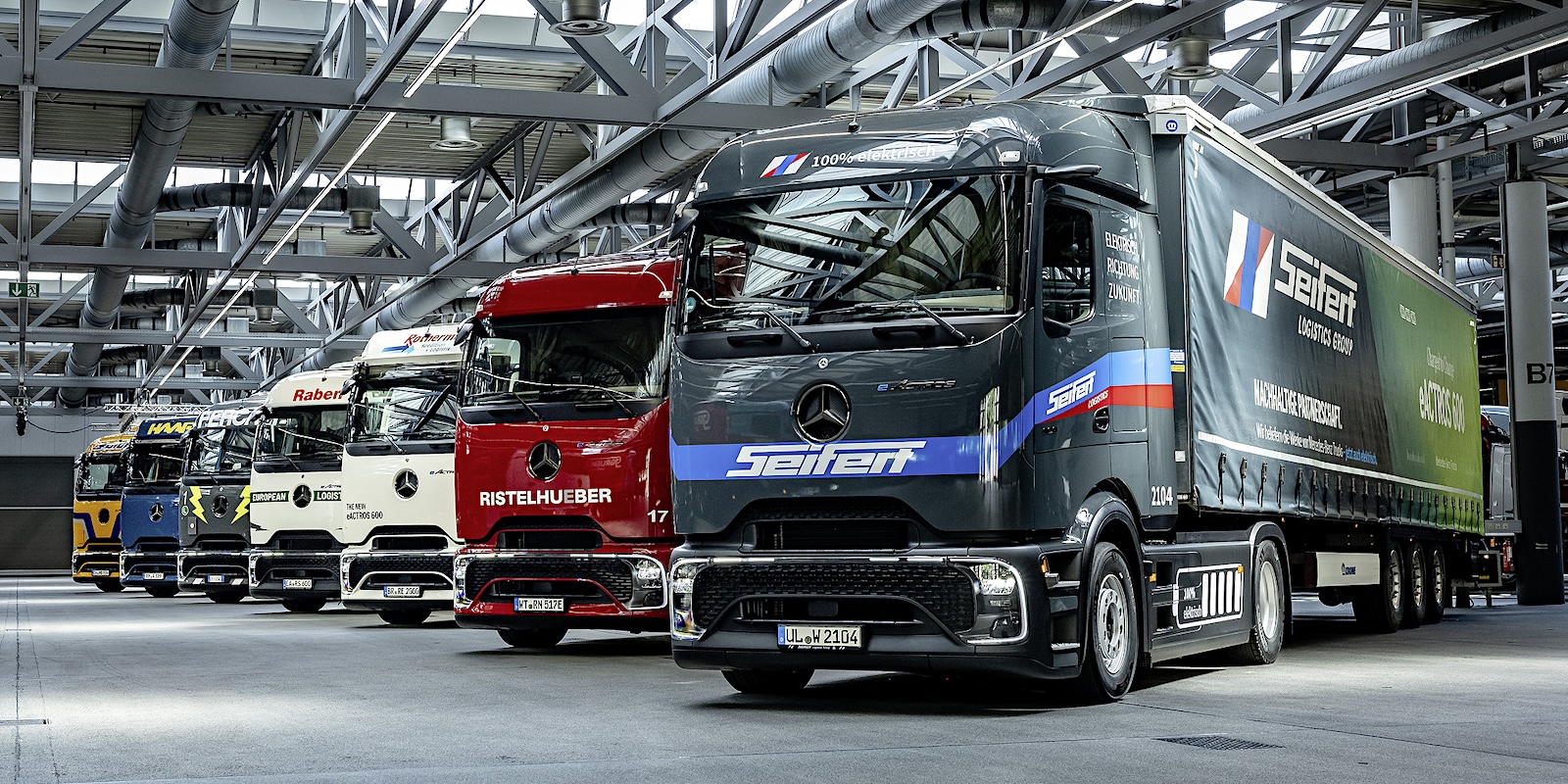
A notable example from the Ulm-based logistics company Seifert illustrates the potential of electric semi trucks. An eActros 600, with an average gross combination weight of 36 metric tons, achieves a daily mileage of around 600 kilometres, with approximately half of the charging events taking place at public charging points. This route not only reduces greenhouse gas emissions by 90 metric tons of CO2e annually but also saves over €4,000 per month in tolls. The average energy consumption of 100 kWh per 100 kilometres is equivalent to approximately 11 litres of diesel, making it an attractive option for Canadian fleets looking to reduce their fuel costs. With the Canadian government's iZEV incentives and provincial rebates, such as those offered in British Columbia and Quebec, the adoption of electric semi trucks becomes even more economically viable.
Operational Alignment Key to Success
The data from Mercedes-Benz highlights that success depends less on vehicle capability than on operational alignment. Routes with predictable distances, centralized terminals, and controlled return schedules allow electric trucks to operate efficiently and reliably. This is particularly relevant in the Canadian context, where fleets often operate in challenging weather conditions and over long distances. By optimizing routes and scheduling, Canadian fleets can maximize the benefits of electric semi trucks, including reduced fuel costs and lower emissions. Additionally, the Canadian government's investment in public charging infrastructure, such as the Electric Vehicle and Alternative Fuel Infrastructure Deployment Initiative, will further support the adoption of electric semi trucks.
Comparative Efficiency and Market Trends
The eActros trucks achieved an impressive 1.61 kWh/mile efficiency, comparable to the Tesla Semi's claimed 1.55 kWh/mile efficiency. However, it's essential to note that the eActros trucks operated under heavy loads and in cold weather conditions, making their efficiency even more remarkable. As the Canadian market continues to grow, with many fleets considering the switch to electric, the data from Mercedes-Benz provides valuable insights into the real-world performance of electric semi trucks. The growing demand for electric heavy-duty trucks is also evident in China, where sales reached 41% market share in May 2026, driven in part by the implementation of Stage 4 heavy-duty vehicle fuel consumption standards. Canadian fleets can learn from these global trends and adapt their strategies to stay competitive in the evolving transportation landscape.
Conclusion
The data from Mercedes-Benz demonstrates that electric semi trucks are a viable option for Canadian fleets, offering significant environmental and economic benefits. By optimizing routes, scheduling, and charging infrastructure, Canadian fleets can maximize the advantages of electric semi trucks and reduce their environmental footprint. With the Canadian government's incentives and investment in public charging infrastructure, the adoption of electric semi trucks is becoming increasingly attractive. As the market continues to grow, Canadian fleets can stay ahead of the curve by embracing electric semi trucks and reaping the benefits of reduced fuel costs, lower emissions, and improved efficiency.