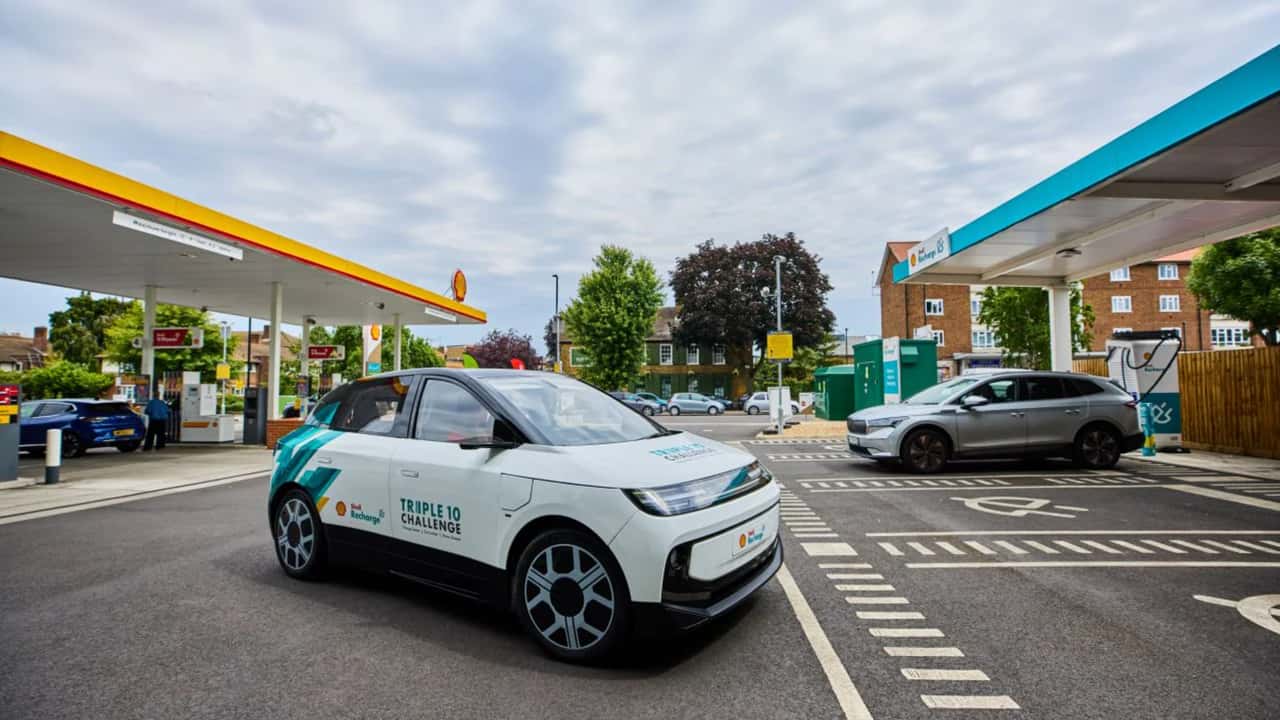
Shell Develops Small Electric Vehicle Featuring Rapid Charging and Advanced Cooling Technology
June 26, 2026
Share
Key Takeaways
Shell has unveiled the Triple 10 Challenge, an electric vehicle (EV) concept featuring innovative battery cooling technology that enables rapid charging and improved efficiency, making it eligible for Canadian government's iZEV incentives and provincial rebates.
The Triple 10 Challenge Concept boasts a simplified single-circuit cooling system, allowing for faster charging and increased vehicle range, with the potential to charge from 10% to 80% in under 10 minutes at a 175 kW charger, adding up to 25 kilometres of range per minute.
If adopted by Canadian automakers, Shell's battery cooling technology could lead to the development of more efficient and affordable electric vehicles (EVs), supporting the Canadian government's goal of having at least 50% of new light-duty vehicle sales be zero-emission vehicles by 2030.
Innovative Electric Vehicle Concept from Shell
Shell has unveiled a unique electric vehicle (EV) concept, the Triple 10 Challenge, which boasts impressive efficiency, rapid charging capabilities, and a reduced carbon footprint. Although Shell has no plans to produce this vehicle, the company is eager to share its innovative battery cooling technology with Canadian automakers. This technology could potentially be used in future EV models available in the Canadian market, making them eligible for the Canadian government's iZEV incentives and provincial rebates.
Advanced Cooling System
The Triple 10 Challenge Concept features a simplified single-circuit cooling system, which directly immerses battery cells in a specialized dielectric fluid. This fluid, developed by Shell, can safely come into contact with high-voltage components, allowing for more efficient heat extraction and greater control over cell temperature. The benefits of this system include faster charging, improved efficiency, and increased vehicle range. For Canadian drivers, this means the possibility of charging their EVs from 10% to 80% in under 10 minutes at a 175 kW charger, adding up to 25 kilometres of range per minute.
Efficiency and Performance
The vehicle claims a running efficiency of 10 kilometres per kilowatt-hour, representing a 30% improvement over many current-generation EVs. While Shell does not specify the exact capacity or chemistry of the battery pack, the company's focus on efficiency and performance could lead to more affordable and environmentally friendly EV options for Canadian consumers. As the Canadian government continues to promote the adoption of electric vehicles through incentives and investments in charging infrastructure, innovations like Shell's cooling technology could play a significant role in reducing the country's carbon footprint.
Potential Impact on the Canadian EV Market
If Shell's battery cooling technology is adopted by Canadian automakers, it could lead to the development of more efficient and affordable EVs, making them more competitive in the Canadian market. With the Canadian government's goal of having at least 50% of new light-duty vehicle sales be zero-emission vehicles by 2030, innovations like Shell's cooling technology could help drive the country towards a more sustainable transportation sector. As the demand for EVs continues to grow in Canada, Shell's technology could provide a unique solution for improving the performance and efficiency of electric vehicles, making them an even more attractive option for Canadian drivers.