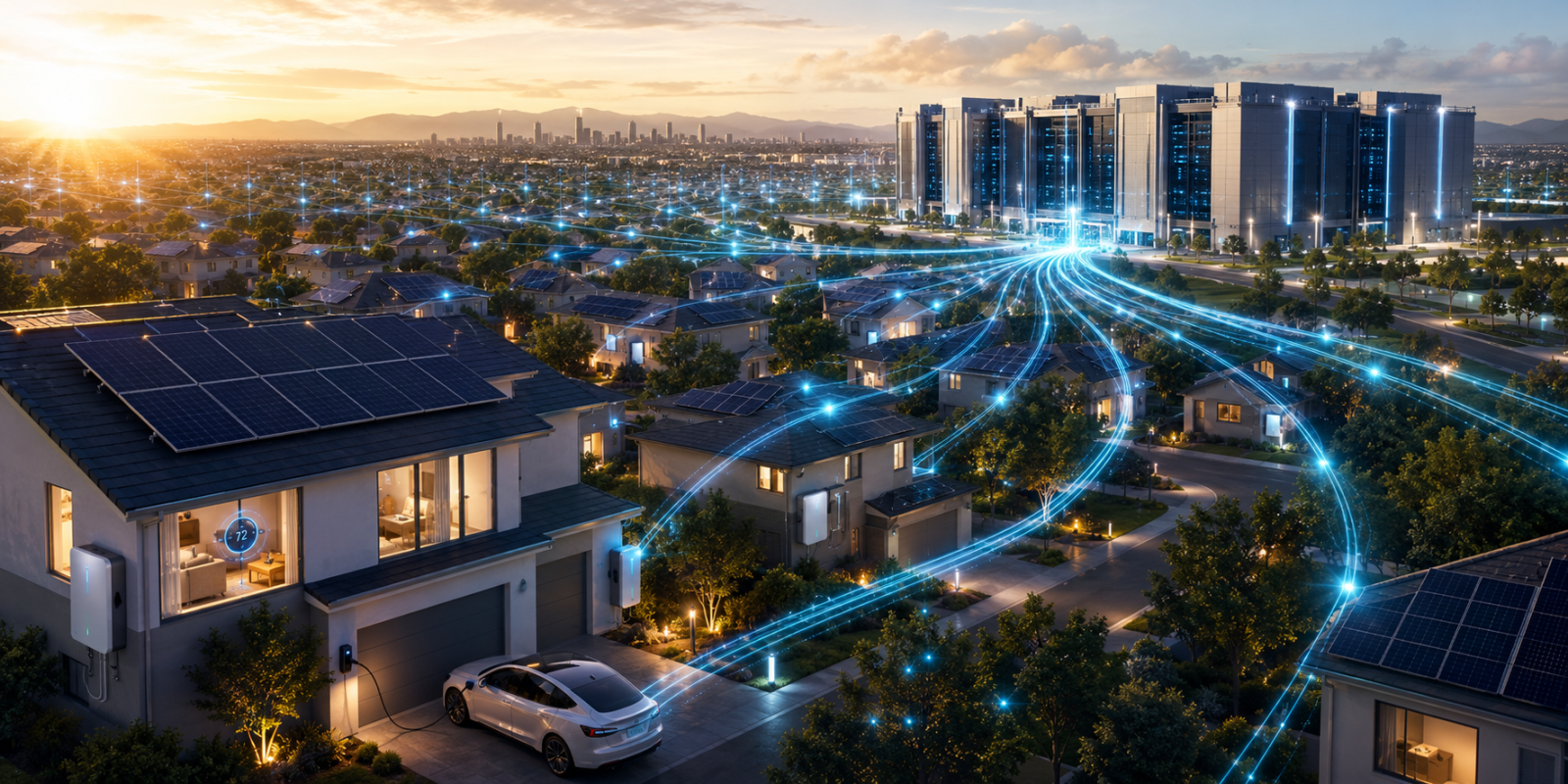
Tesla and Sunrun Partner to Develop Large Virtual Power Plant for Data Centers
June 24, 2026
Share
Key Takeaways
Canada has a unique opportunity to leverage distributed power plants, aggregating home batteries and other devices to create a massive virtual power plant, with potential to provide over 16 gigawatts of capacity, supporting the growth of electric vehicles (EVs) and renewable energy.
The Canadian government's iZEV incentives and provincial rebates, such as the Ontario Rebate Program, are making home energy storage systems and electric vehicles more accessible, with costs decreasing and thousands of dollars in savings available for Canadians adopting clean energy technologies.
Provinces like Ontario, Quebec, and British Columbia are well-positioned to adopt distributed power plants, with existing infrastructure and renewable energy resources, and initiatives like BC Hydro's Smart Home program offering incentives for energy-efficient technologies, including home batteries and thermostats for EV owners.
Distributed power plants can be deployed quickly, often in months, and can generate revenue for companies and homeowners, creating new opportunities for businesses and individuals to participate in the energy market, particularly in provinces with existing net metering programs for electric vehicle charging.
The adoption of distributed power plants can help Canada achieve its goal of net-zero emissions by 2050, reducing strain on the grid and providing a more resilient and efficient energy system for electric vehicle owners and the wider population.
Canada's Potential for Distributed Power Plants
As the world shifts towards renewable energy, Canada has a unique opportunity to leverage distributed power plants to meet its growing electricity demands. A recent announcement from Sunrun, Tesla, and Renew Home in the US highlights the potential for aggregating home batteries, thermostats, and other devices to create a massive distributed power plant. This concept can be applied to the Canadian context, where the federal government's iZEV incentives and provincial rebates are encouraging the adoption of electric vehicles and home energy storage systems.
A New Era for Virtual Power Plants
The partnership between Sunrun, Tesla, and Renew Home aims to create a "capacity-as-a-solution" framework that can provide over 16 gigawatts of capacity to data centres and utilities. While this number is theoretical, it demonstrates the potential for distributed energy resources to play a significant role in meeting Canada's electricity demands. With the Canadian government's goal of achieving net-zero emissions by 2050, distributed power plants can help reduce the strain on the grid and provide a more resilient and efficient energy system.
Canadian Pricing and Incentives
The cost of home batteries and energy storage systems in Canada is decreasing, making them more accessible to homeowners. With the federal government's iZEV incentives and provincial rebates, such as the Ontario Rebate Program, Canadians can save thousands of dollars on the purchase of an electric vehicle or home energy storage system. Additionally, the Canadian government's Climate Action Incentive Fund provides funding for initiatives that support the adoption of clean energy technologies.
Provincial Opportunities
Provinces like Ontario, Quebec, and British Columbia are well-positioned to adopt distributed power plants, given their existing infrastructure and renewable energy resources. For example, Ontario's Independent Electricity System Operator (IESO) has launched initiatives to encourage the development of virtual power plants and energy storage systems. Similarly, BC Hydro's Smart Home program offers incentives for homeowners to adopt energy-efficient technologies, including home batteries and thermostats.
Speed and Efficiency
One of the key benefits of distributed power plants is their ability to be deployed quickly, often in a matter of months. This is in contrast to traditional power plants, which can take years to build and permit. As Canada continues to grow and urbanize, distributed power plants can help meet the increasing demand for electricity, particularly in areas with high population density, such as the Greater Toronto Area or Vancouver.
A New Revenue Stream
The partnership between Sunrun, Tesla, and Renew Home demonstrates the potential for distributed energy resources to generate revenue for companies and homeowners. In Canada, this could create new opportunities for businesses and individuals to participate in the energy market, particularly in provinces with existing net metering programs. As the energy landscape continues to evolve, distributed power plants are likely to play an increasingly important role in Canada's transition to a low-carbon economy.
Conclusion
The concept of distributed power plants has the potential to revolutionize the way Canada generates and distributes electricity. With the right incentives and infrastructure in place, Canadians can benefit from a more efficient, resilient, and sustainable energy system. As the country continues to transition towards a low-carbon economy, distributed power plants are likely to play a key role in meeting our energy needs, particularly in urban centres where the demand for electricity is highest. With Canadian pricing and incentives in place, the time is right to explore the potential of distributed power plants and create a more sustainable energy future for all Canadians.