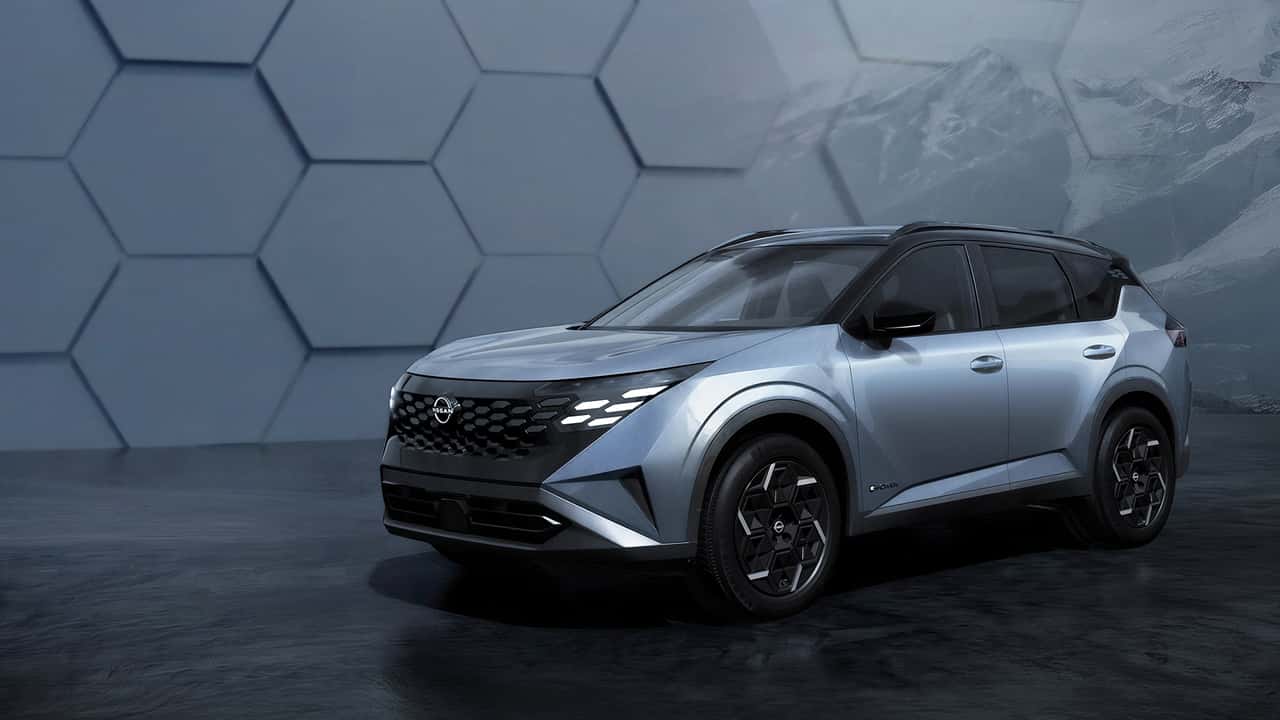
2027 Nissan Rogue E-Power Unveiled: Nissan’s Stylish Response to Toyota RAV4 Hybrid
April 14, 2026
Share
Key Takeaways
Nissan is set to launch the 2027 Rogue Hybrid E-Power in Canada, marking the automaker’s first conventional hybrid offering in the market and providing a new option for eco-conscious drivers.
The Rogue Hybrid E-Power features Nissan's innovative E-Power series-hybrid system, where a gasoline engine solely charges a battery that powers electric motors, delivering EV-like performance with expected fuel economy ratings exceeding 40 mpg.
Canadian buyers can benefit from provincial incentives and rebates such as iZEV programs in Ontario, British Columbia, and Quebec, though specific pricing has not yet been released, analysts predict it will be competitively priced.
Early reviews of the E-Power system from the Japan market indicate a seamless, responsive driving experience with instant torque and smooth acceleration, appealing to EV enthusiasts.
Nissan's 2027 Rogue Hybrid E-Power Debuts in Canada: A Fresh Option for Eco-Conscious Drivers
Nissan currently does not offer any conventional hybrid models in Canada, a gap that becomes increasingly significant as electric vehicle (EV) sales begin to plateau. Canadian drivers eager for a hybrid option have a reason to celebrate: the 2027 Nissan Rogue Hybrid E-Power is on its way, and the vehicle was recently revealed in full for the first time.
The new Rogue Hybrid E-Power sports a modern design that echoes the latest Nissan Leaf, with distinctive daytime running lights that feature sharp, pointed ends on either side. The overall aesthetic is characterised by crisp edges and angles, presenting a stylish upgrade over its predecessor. This visual refresh not only enhances the vehicle's appeal but also aligns it with Nissan's forward-thinking design language.
Under the Hood: The E-Power Series-Hybrid System
While Nissan has offered a plug-in hybrid version of the Rogue in Canada—as a stopgap measure—it has been a rebadged Mitsubishi. The 2027 Rogue Hybrid E-Power, however, introduces Nissan's innovative E-Power series-hybrid system to the Canadian market. This system differs significantly from the parallel hybrid setups found in popular models like the Toyota Prius and RAV4.
In a series-hybrid system, the gasoline engine solely functions to charge a small battery pack. This battery, in turn, powers electric motors located at each axle. Essentially, the Rogue operates like an electric vehicle (EV), with the gasoline engine acting as a backup power generator—similar to extended-range EVs offered by brands like Scout Motors and Ram, but without the plug-in capability.
In contrast, parallel-hybrid systems allow both the gasoline engine and electric motor to drive the wheels directly. Nissan's series-hybrid approach aims to deliver the smooth, effortless power characteristic of EVs. According to Nissan, the Rogue Hybrid E-Power is expected to achieve fuel economy ratings exceeding 40 mpg, making it a fuel-efficient option for Canadian drivers.
Canadian Incentives and Pricing
For Canadian buyers, the 2027 Nissan Rogue Hybrid E-Power presents an attractive proposition, especially with the various provincial incentives and rebates available for hybrid and EV vehicles. Programs such as Canada's iZEV (Inflation Reduction Act Zero Emission Vehicle) incentives could significantly reduce the final purchase price. Additionally, provincial rebates—like those offered by Ontario, British Columbia, and Quebec—can further enhance affordability.
While specific pricing for the Canadian market has not yet been released, industry analysts predict that the Rogue Hybrid E-Power will be competitively priced, positioning it as a strong contender in the competitive compact crossover segment. With Canadian fuel prices often higher than in the U.S., the improved fuel efficiency of the Rogue Hybrid E-Power could translate to substantial long-term savings for owners.
Driving Experience and Performance
Those interested in understanding the driving dynamics of Nissan's E-Power system can refer to reviews of Japan-market models, where the system has already been in use. Early feedback suggests a seamless and responsive driving experience, with the electric motor providing instant torque and smooth acceleration—qualities that EV enthusiasts appreciate.
As the automotive landscape in Canada continues to evolve, the introduction of the 2027 Nissan Rogue Hybrid E-Power offers a compelling middle ground for drivers who desire hybrid efficiency without compromising on the driving experience. Stay tuned for further updates and official pricing details as the launch date approaches.