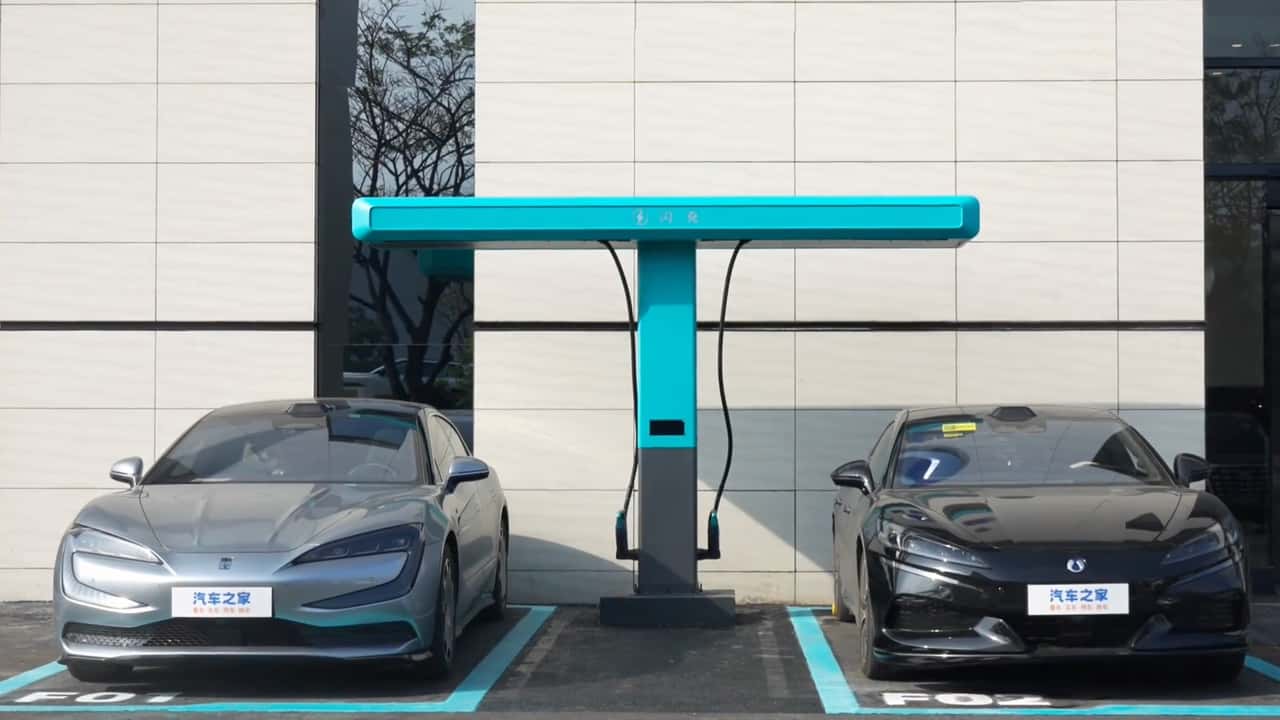
BYD to Install Thousands of Fast EV Chargers in Europe and Soon Canada
June 11, 2026
Share
Key Takeaways
BYD is expanding its EV charging network to Europe and Canada, planning to install at least 3,000 high-powered Flash Chargers in Europe by 2027, with a focus on megawatt-capable technology and dual DC fast chargers delivering up to 1,500 kilowatts of power.
The company's Flash Chargers boast significantly higher power output than competitors, including Tesla's Supercharger V4, and will support Canadian EV owners with rapid charging, potentially qualifying for the Canadian government's iZEV incentives and provincial rebates.
BYD's expansion into the Canadian market is expected to play a significant role in supporting the country's transition to a more sustainable transportation system, with the company seeking a Business Development Manager to oversee the deployment of its Flash Charging network in Canada, although no timeline has been announced.
BYD Expands EV Charging Network to Europe and Beyond
BYD, a Chinese automaker with ambitions to become the world's largest, is aggressively expanding its European presence with thousands of high-powered EV chargers. The company aims to install at least 3,000 of its Flash Chargers across Europe by 2027, with a focus on megawatt-capable technology. These dual DC fast chargers can deliver up to 1,500 kilowatts of power, although only vehicles equipped with CCS2 charge ports and BYD's latest-generation Blade Battery can fully utilize this capacity.
Canadian Implications and Future Plans
While BYD's European expansion is underway, the company is also setting its sights on the Canadian market. With the Canadian government's recent reduction in import fees and imposition of a 49,000-vehicle quota for Chinese-built cars, BYD sees an opportunity to establish a foothold in the country. The company is currently seeking a Business Development Manager to oversee the deployment of its Flash Charging network in Canada, although no timeline has been announced for the launch of its first Canadian charger. Canadian EV owners can expect to benefit from BYD's high-powered charging technology, potentially qualifying for the Canadian government's iZEV incentives and provincial rebates, such as those offered in British Columbia and Ontario.
Competitive Landscape and Technology
BYD's Flash Chargers boast significantly higher power output than those of its competitors, including Tesla's Supercharger V4, which is capped at 500 kW. However, Tesla's extensive network of over 20,000 DC fast chargers in Europe currently gives it a considerable advantage in terms of sheer numbers. As BYD expands its presence in Europe and enters the Canadian market, it will be interesting to see how the company's high-powered charging technology is received by consumers. The Denza Z9GT, a luxury EV capable of utilizing BYD's Flash Chargers, is priced around $133,000 CAD and can charge from 10-70% in just five minutes, making it an attractive option for those who value rapid charging and are willing to pay a premium.
Future of EV Charging in Canada
As BYD prepares to enter the Canadian market, the company's focus on high-powered charging technology is likely to resonate with Canadian EV owners, who often travel long distances and require rapid charging to complete their journeys. With the Canadian government's commitment to reducing greenhouse gas emissions and promoting the adoption of electric vehicles, the expansion of BYD's Flash Charging network could play a significant role in supporting the country's transition to a more sustainable transportation system. As the network grows, Canadian EV owners can expect to see more charging stations along highways and in urban centres, making it easier to own and operate an electric vehicle, whether for daily commutes or long road trips across the kilometre-wide country.