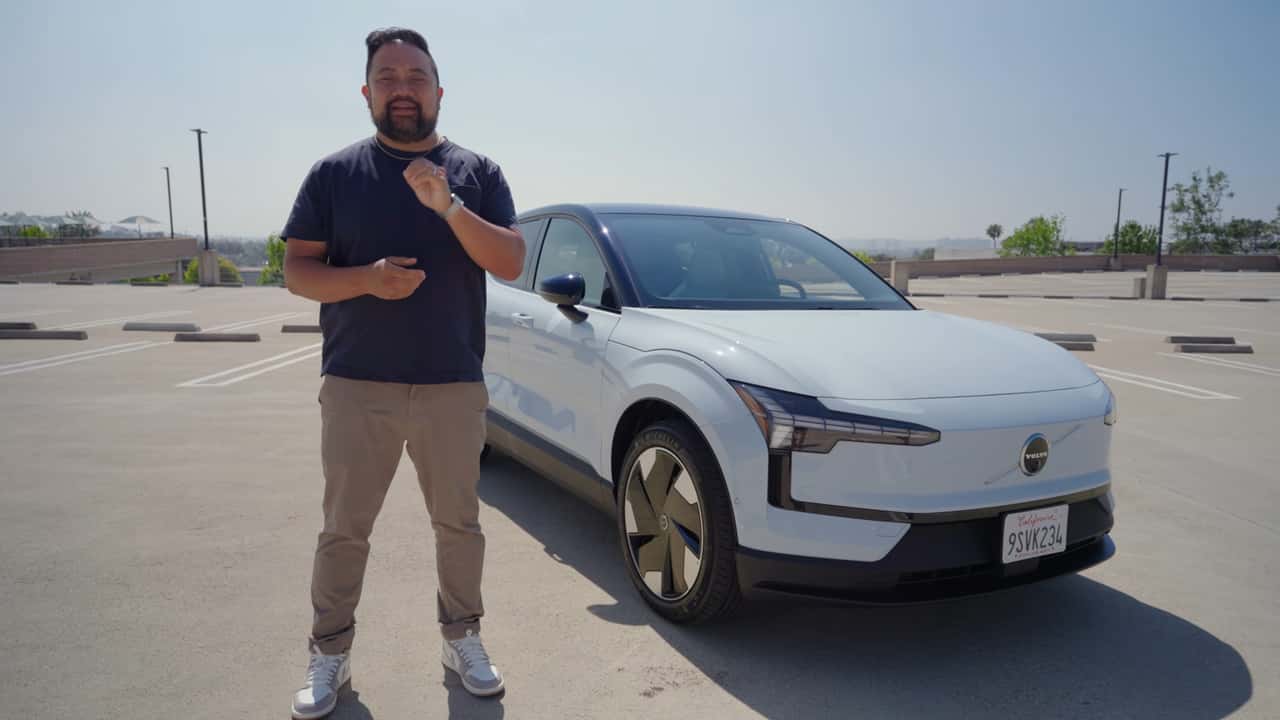
Edmunds One Year Review of Volvo EX30 Reveals Mixed Experience
June 12, 2026
Share
Key Takeaways
The Volvo EX30, a compact electric vehicle (EV), has a higher-than-expected price point in Canada, likely over $50,000 CAD, which may not be eligible for the full iZEV incentive due to the price cap, affecting its competitiveness in the Canadian EV market.
The EX30 boasts a compact design, measuring 21 inches shorter than the Tesla Model Y, and quick performance, accelerating from 0 to 60 miles per hour in 3.6 seconds, making it suitable for city driving and Canadian roads.
The EX30 has an EPA-rated range of 250 miles, but highway driving can reduce the range to around 200 miles, and charging speeds peak at around 150 kilowatts, which may be a consideration for Canadian owners who frequently drive long distances or require faster EV charging.
Software issues, including a glitchy infotainment system and overly sensitive driver monitoring system, have plagued the EX30, but Volvo has released software updates to improve performance, which Canadian owners can expect to receive to enhance their EV driving experience.
Despite its issues, the EX30 has proven to be a reliable vehicle, but its discontinuation in the US market after just two years may impact its resale value and availability in Canada, where consumers may still be able to purchase used models and be eligible for provincial EV rebates.
Introduction to the Volvo EX30
The Volvo EX30 was initially touted as a great small, powerful, and affordable electric vehicle (EV) in the North American market, with an estimated starting price of around $35,000 USD. However, the actual pricing in the United States ended up being significantly higher, with the first units shipped costing around $47,895 USD. For Canadian consumers, this would translate to a higher price point as well, likely over $50,000 CAD, which may not be eligible for the full iZEV incentive due to the price cap.
Design and Performance
The EX30 boasts a compact design, measuring 21 inches shorter than the Tesla Model Y, making it ideal for city driving and parking in tight spaces. The interior is spacious enough to comfortably seat four adults, with comfortable seats and a creative cabin design. In terms of performance, the EX30 Twin Motor is quick, accelerating from 0 to 60 miles per hour in just 3.6 seconds, comparable to a Porsche 911 Cabriolet. Canadian drivers can expect similar performance, with the ability to travel long distances on the Trans-Canada Highway, albeit with some limitations due to charging speeds and range.
Software and Infotainment Issues
Despite its promising design and performance, the EX30 has been plagued by software issues, including a glitchy infotainment system and an overly sensitive driver monitoring system. The centrally-mounted touchscreen can be frustrating to use, as it requires drivers to take their eyes off the road, which can trigger the monitoring system's alarm. Additionally, the Apple CarPlay feature sometimes fails to launch, and the capacitive window switches can be unresponsive at times. These issues may be addressed in future software updates, which Canadian owners can expect to receive, given Volvo's history of providing updates to improve the vehicle's performance.
Key Fob and One-Pedal Driving
The EX30's key fob has been a point of contention, as it lacks buttons and relies on proximity to lock and unlock the vehicle. However, this feature can be temperamental, sometimes locking the car when trying to open the door. A digital key is available, but it requires the use of a smartphone. Later models of the EX30 come with true one-pedal driving, which is not available in the 2025 model year. Canadian owners may be able to take advantage of this feature in future models, which could enhance the overall driving experience.
Range and Charging
The EX30 has an EPA-rated range of 250 miles, with the Edmunds range test putting it at 256 miles. However, highway driving can reduce the range to around 200 miles, making it less suitable for road trips. The charging speed is also a concern, with a peak of around 150 kilowatts and a claimed 10-to-80% time of 26 minutes. Canadian owners can expect similar range and charging performance, which may be a consideration for those who frequently drive long distances or require faster charging.
Reliability and Discontinuation
Despite its issues, the EX30 has proven to be a reliable vehicle, with no breakdowns or incidents leaving the driver stranded over the past 12 months. Volvo has also released several software updates to improve the vehicle's performance. However, the EX30 has been discontinued in the United States after just two years on sale. Canadian consumers who are interested in purchasing a used EX30 should be aware of these issues and consider them when making a decision. Additionally, they may be eligible for provincial rebates, such as those offered in British Columbia or Quebec, which could help offset the cost of purchasing an EV.
Conclusion
In conclusion, while the Volvo EX30 shows promise with its compact design and quick performance, its software issues, limited range, and charging speeds are significant drawbacks. Canadian consumers who are in the market for a compact EV may want to consider other options, such as the Hyundai Ioniq 5 or the Nissan Leaf, which may offer better value and performance. As the Canadian EV market continues to evolve, it will be interesting to see how Volvo responds to these challenges and whether they will introduce new models that address these concerns. With the iZEV incentive programme and provincial rebates available, Canadian consumers have a range of options to choose from, and it is essential to carefully consider the pros and cons of each vehicle before making a decision.