Every Extended-Range EV Arriving in the U.S. Soon From Scout to Kia
February 7, 2026
Share
Key Takeaways
Extended-Range Electric Vehicles (EREVs) combine electric performance with a gasoline generator to extend range, eliminating range anxiety for Canadian drivers, especially on long trips.
The Ram 1500 REV, expected in Canada in late 2026, offers 235 km of electric range and extends to 1,100 km with a full gas tank, featuring fast charging that adds 80 km in 10 minutes.
EREVs like the Ram 1500 REV and Jeep Grand Wagoneer qualify for Canada’s iZEV program with up to $4,000 in federal incentives, plus provincial rebates, making them more affordable.
Extended-Range Electric Vehicles (EREVs): What Canadian Drivers Need to Know
As the landscape of the Canadian car market shifts, with federal iZEV incentives playing a crucial role in EV adoption, a new category of electrified vehicles is emerging: Extended-Range Electric Vehicles (EREVs). These vehicles promise all the benefits of traditional electric vehicles (EVs)—quieter operation, lower emissions, and smooth acceleration—without the range anxiety or charging concerns that sometimes deter potential buyers.
What is an EREV?
An EREV is, at its core, an electric vehicle, but it includes a combustion engine that functions solely as a generator for the electric powertrain. Unlike traditional hybrids, there is no mechanical connection between the engine and the wheels. The engine's only job is to recharge the battery while driving, ensuring you never run out of electric range.
This means that if you find yourself at a location without a charging station, you can simply stop at a local fuelling station, fill up the tank, and let the generator recharge the battery. It’s a practical solution for those who want to enjoy the benefits of EVs without worrying about the availability of charging infrastructure across Canada.
Benefits of EREVs for Canadian Drivers
1. **Eliminates Range Anxiety**: With an EREV, you have the assurance that a full tank of gasoline can significantly extend your range. For instance, the Ram 1500 REV, expected to launch in Canada in late 2026 as a 2027 model, has an estimated 145 km of range on a full battery. However, with a full tank of gas, that range extends to a impressive 1,100 km. This is particularly useful for long road trips across provinces where charging infrastructure may still be developing.
2. **Fast Charging Capability**: Like regular EVs, EREVs can be fast-charged. The Ram 1500 REV, for example, features a CCS-1 fast charging port that can add up to 80 km of range in just 10 minutes when plugged into a 145 kW DC charger. This is perfect for quick top-ups at Canadian fast-charging stations.
3. **Lower Emissions and Improved Efficiency**: EREVs offer the same efficiency and lower emissions as traditional EVs. When operating on electric power, they produce zero tailpipe emissions. Even when the generator is running, they are more efficient than conventional gasoline vehicles.
4. **Eligibility for Canadian Incentives**: EREVs qualify for Canada's iZEV program, which offers up to $4,000 in federal incentives. Additionally, many provinces offer their own rebates. For example, Ontario offers up to $4,000 through its Drive Clean Rebate and Incentive Program, and British Columbia provides up to $3,000. These incentives make EREVs more affordable for Canadian consumers.
Upcoming EREVs for the Canadian Market
Ram 1500 REV
After several delays and a name change, the Ram 1500 REV is set to become one of the first next-generation EREVs available in Canada. Expected to enter production in late 2026 as a 2027 model, this extended-range full-size pickup will feature a robust 92 kWh main battery pack. Power is delivered through two electric drive modules—a 250 kW unit at the front and a 248 kW unit at the rear—producing a combined output of 647 horsepower and 876 N·m of torque.
With a full battery, the Ram 1500 REV offers an estimated 235 km of electric range. However, a full tank of gasoline, powered by a 3.6-litre Pentastar V-6 engine driving a 130 kW generator, extends the range to a impressive 1,100 km. The truck also includes a CCS-1 fast-charging port capable of adding up to 80 km of range in 10 minutes. While specific pricing hasn’t been released, expect the Ram 1500 REV to be priced above the current gasoline models, which start at around $90,000 in Canada.
Scout Terra and Traveler
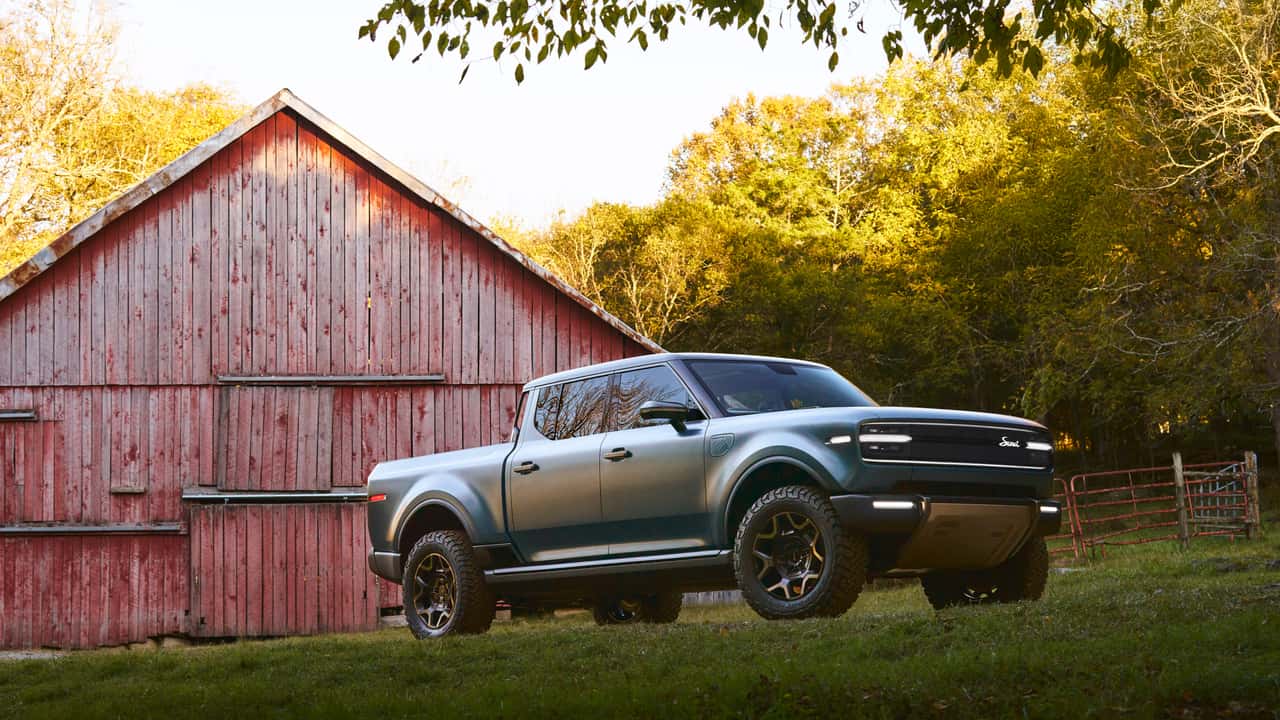
Scout’s “Harvester” EREV models—the Terra pickup and Traveler SUV—are slated for production at a new factory in South Carolina by late 2025. These vehicles pay homage to International Harvester’s iconic Scout models from the 1960s and 70s but with modern technology.
The EREV versions of the Terra and Traveler feature a main lithium-iron phosphate (LFP) battery with a capacity of approximately 63 kWh, providing an all-electric range of around 240 km. A naturally aspirated four-cylinder gas engine mounted near the rear axle acts as a generator to extend the range. With a full tank of gas and a full battery, these EREVs offer a total range of approximately 800 km.
Scout will also offer all-electric versions of these models, with a range of around 560 km from a 120-130 kWh battery. Approximately 85% of Scout reservation holders in Canada have opted for the EREV versions, indicating strong interest. Pricing is expected to start under $60,000, but it’s unclear if this applies to the EV or EREV models.
Jeep Grand Wagoneer EREV
Following the same layout as the Ram 1500 REV, Stellantis will also offer the Jeep Grand Wagoneer as an EREV. This vehicle is claimed to be **"Canada's first range-extended electric vehicle,"** and it may arrive slightly before the Ram.
The Jeep Grand Wagoneer EREV features a 92 kWh battery powering two electric motors—one at the front and one at the rear—delivering a maximum output of 647 hp and 890 N·m of torque. This ensures the large SUV can accelerate from 0 to 100 km/h in just five seconds. With a full battery, it offers an electric range of 235 km, extendable to 1,100 km with a full tank of gas.
While specific Canadian pricing and availability details are yet to be announced, it is expected to be competitively priced, likely above the current Grand Wagoneer models which start around $95,000 in Canada.
Why Consider an EREV in Canada?
EREVs represent a practical middle ground for Canadian drivers who love the idea of EVs but are concerned about range and charging infrastructure—particularly in rural areas or during long road trips. With the added benefit of qualifying for federal and provincial iZEV incentives, EREVs are becoming an increasingly attractive option.
As more models hit Canadian showrooms in 2026 and beyond, consumers will have a wider choice of vehicles that combine the best of both worlds: electric performance and the security of a gasoline range extender. Keep an eye on announcements from manufacturers and stay informed about the evolving incentives landscape to make an informed decision when the time comes to choose your next vehicle.