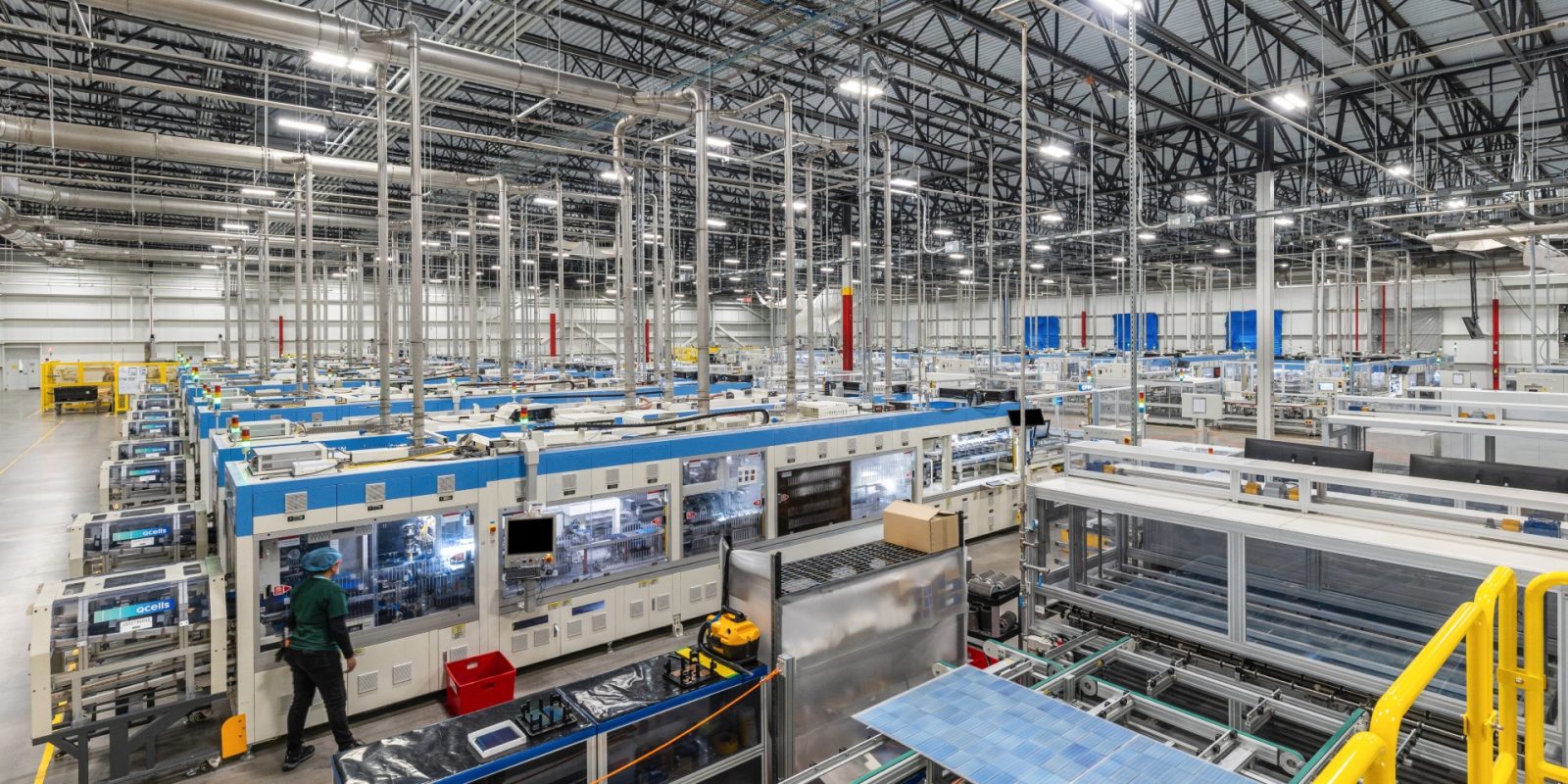
US Largest Solar Cell Factory to be Built in Georgia
June 11, 2026
Share
Key Takeaways
Qcells' new solar cell factory in Georgia, set to become the largest in US history by Q3 2026, may increase competition for Canadian solar companies and impact the Canadian solar market, potentially leading to lower prices for electric vehicle (EV) charging and renewable energy solutions.
The Cartersville factory's production of solar panels under one roof could reduce US reliance on international supply chains and tariffs, indirectly affecting Canadian pricing and potentially making solar-powered EV charging more affordable for Canadian consumers.
Canadian companies may still find opportunities to thrive in the solar industry, with government incentives like the iZEV program, provincial rebates, and tax credits such as the Canadian Renewable and Conservation Expenses (CRCE), supporting the development of renewable energy projects and electric vehicle adoption.
Canadian Implications of Qcells' US Solar Cell Factory
Qcells, a solar giant, has commenced production of solar cells at its Cartersville, Georgia factory, positioning itself to become the largest solar cell factory in US history by Q3 2026. This development has significant implications for the North American solar industry, including Canadian solar companies and consumers. As the US reduces its dependence on imported solar components, Canadian businesses may face increased competition in the market. However, with the Canadian government's focus on renewable energy and incentives like the iZEV program, which offers rebates for electric vehicles and solar panels, Canadian companies may still find opportunities to thrive.
Impact on the Canadian Solar Market
The Cartersville factory is a game-changer for the US solar industry, as it will produce every major piece of a solar panel under one roof, reducing reliance on international supply chains and tariffs. While this may not directly impact Canadian pricing, it could lead to increased competition and potentially lower prices for Canadian consumers. Additionally, with provincial rebates and incentives available in Canada, such as the Ontario Rebate for Energy Efficiency and the BC Hydro Renewable Energy Program, Canadians may be able to take advantage of more affordable solar options.
Job Creation and Economic Benefits
The Qcells factory in Cartersville is expected to employ nearly 4,000 people in Georgia, demonstrating the potential for job creation in the renewable energy sector. Similarly, in Canada, investments in solar energy and manufacturing could lead to significant job creation and economic benefits, particularly in provinces with a strong focus on renewable energy. As the Canadian government continues to invest in clean energy initiatives, companies like Qcells may explore opportunities to establish manufacturing facilities in Canada, taking advantage of the country's skilled workforce and favourable business environment.
Tax Credits and Incentives
In the US, Qcells is well-positioned to take advantage of tax credits and incentives, such as the Domestic Content Bonus and the Advanced Manufacturing Production Tax Credit. In Canada, similar incentives, like the Canadian Renewable and Conservation Expenses (CRCE) tax credit, are available to support the development of renewable energy projects. Canadian companies may be able to leverage these incentives to reduce costs and increase competitiveness in the market. Furthermore, with the Canadian government's commitment to reducing greenhouse gas emissions and increasing the use of renewable energy, there may be opportunities for Canadian companies to access funding and support for solar energy projects.