Hyundai Ioniq China Launch Features Two Innovative Concept Cars
April 10, 2026
Share
Key Takeaways
Hyundai unveiled two new Ioniq concepts, the Venus sedan and Earth SUV, exclusively for the Chinese market, showcasing a unique design direction ahead of Auto China 2026
The Venus features a sporty, driver-focused interior with a massive wrap-around screen, while the Earth emphasizes rugged styling with plastic cladding and skid plates
Hyundai plans to expand into EREVs and plug-in hybrids in China, with production starting late 2026 and deliveries in 2027, though these models won't reach Canada
Hyundai Unveils New Ioniq Concepts for China; No Plans to Bring Them to Canada
Hyundai has introduced the Ioniq brand of electric vehicles (EVs) in China, but Canadian drivers won't see any existing Ioniq models making their way to this side of the Pacific. Although vehicles like the Ioniq 5 have achieved global success, Hyundai plans to develop a distinct Ioniq lineup specifically for the Chinese market.
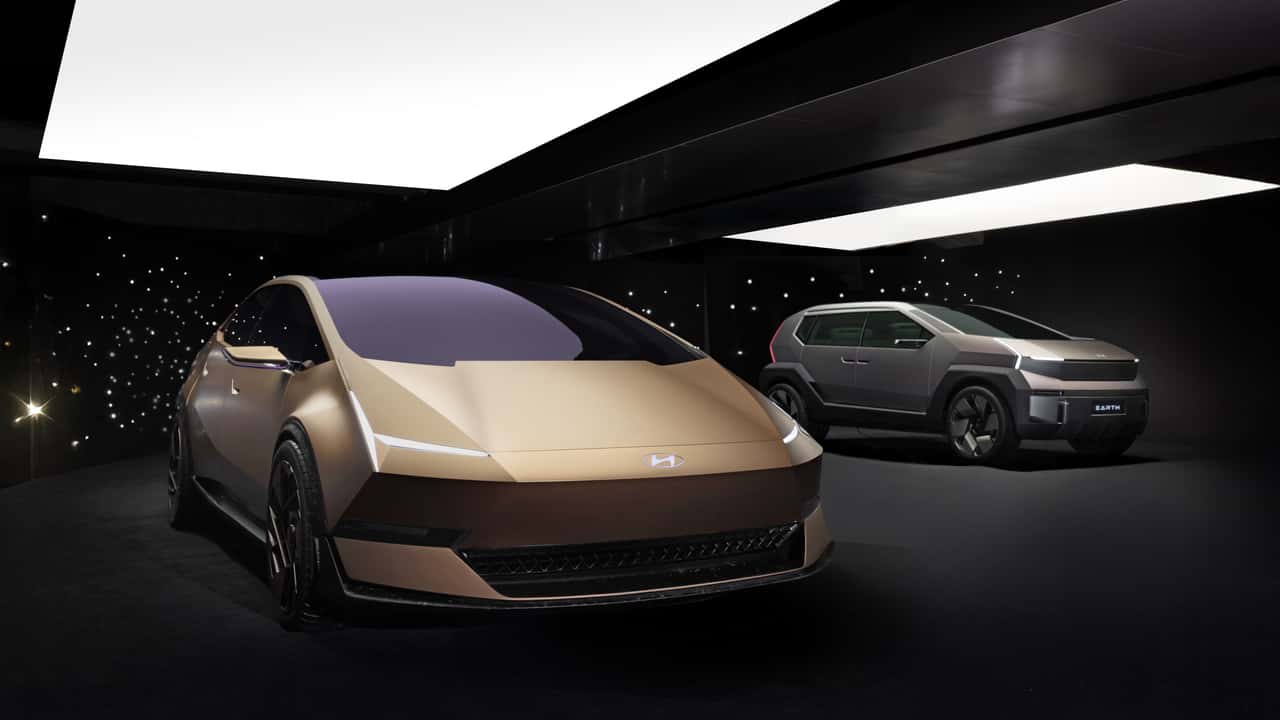
The automaker previewed this new design direction with two striking concepts: the Venus and the Earth. The Venus is a sleek, sporty sedan that shares a streamlined aesthetic with the Ioniq 6 but features a unique side profile defined by a single, continuous curve from front to rear. Hyundai describes its interior as a “driver-focused, wrap-around cockpit,” equipped with a massive screen stretching from the centre of the dash to the passenger side—a design increasingly common in Chinese-market cars.
The Earth concept is designed as a robust SUV, boasting plastic cladding around the wheels, ample ground clearance, and chunky skid plates with exposed bolts to emphasise its rugged appearance. Although Hyundai has not confirmed whether these concepts will enter production, both preview the future direction of the Ioniq brand in China ahead of Auto China 2026.
It's important to note that Ioniq models not intended for the Chinese market will not adopt this design language. These vehicles will also move away from the numbered naming convention, instead adopting planet names. Furthermore, they will be produced locally in various regions rather than being imported from China.
Hyundai’s Challenging Time in China
Hyundai once operated six production facilities in China, but geopolitical tensions between Beijing and Seoul, combined with declining sales, led the Korean automaker to close three of them. Li Fenggang, president of Beijing Hyundai Motor (Hyundai’s joint venture with SAIC in China), stated, “Starting with the two concept cars unveiled today, we will continue to present products that reflect deep insight into Chinese customers and our genuine commitment to this market.”
Currently, Hyundai’s lineup of imported models in China is limited to the Palisade, Elantra N, and Ioniq 5 N. The Ioniq 5 N, priced at over $60,000 USD, is considered very expensive by Chinese standards, especially when compared to numerous cheaper local EVs offering similar performance.
In contrast, Beijing Hyundai Motor manufactures seven additional models locally, with only the Elexio being fully electric. The Elexio is built on the 400-volt, front-wheel-drive version of the E-GMP platform, making it more closely related to vehicles like the Kia EV4 and EV5 rather than Hyundai’s Ioniq series. Consequently, its charging power is capped at 150 kilowatts.
Future Plans for China Include EREVs and Plug-In Hybrids
Hyundai has ambitious expansion plans for China, extending beyond pure EVs to include extended-range electric vehicles (EREVs) and plug-in hybrids. The first Hyundai EREVs are scheduled to begin production in both China and the United States by the end of 2026, with customer deliveries starting in 2027.
Canadian EV Incentives and Availability
For Canadian EV enthusiasts, it's crucial to stay informed about local incentives and rebates. Programs such as the iZEV (Zero-Emission Vehicles) incentives offer substantial savings on eligible EVs. Additionally, provincial rebates can further reduce the cost. For instance, Ontario offers up to $4,000 through its EV rebates program, while British Columbia provides up to $3,500. These incentives make owning an EV more affordable and help offset the higher initial cost.
While Hyundai’s new Ioniq concepts are exclusive to the Chinese market, Canadian drivers can still explore current Ioniq models available locally. The Ioniq 5 and Ioniq 6 remain popular choices, boasting impressive ranges and cutting-edge technology. With ongoing developments in the Canadian EV market, there’s always something new on the horizon for eco-conscious drivers.