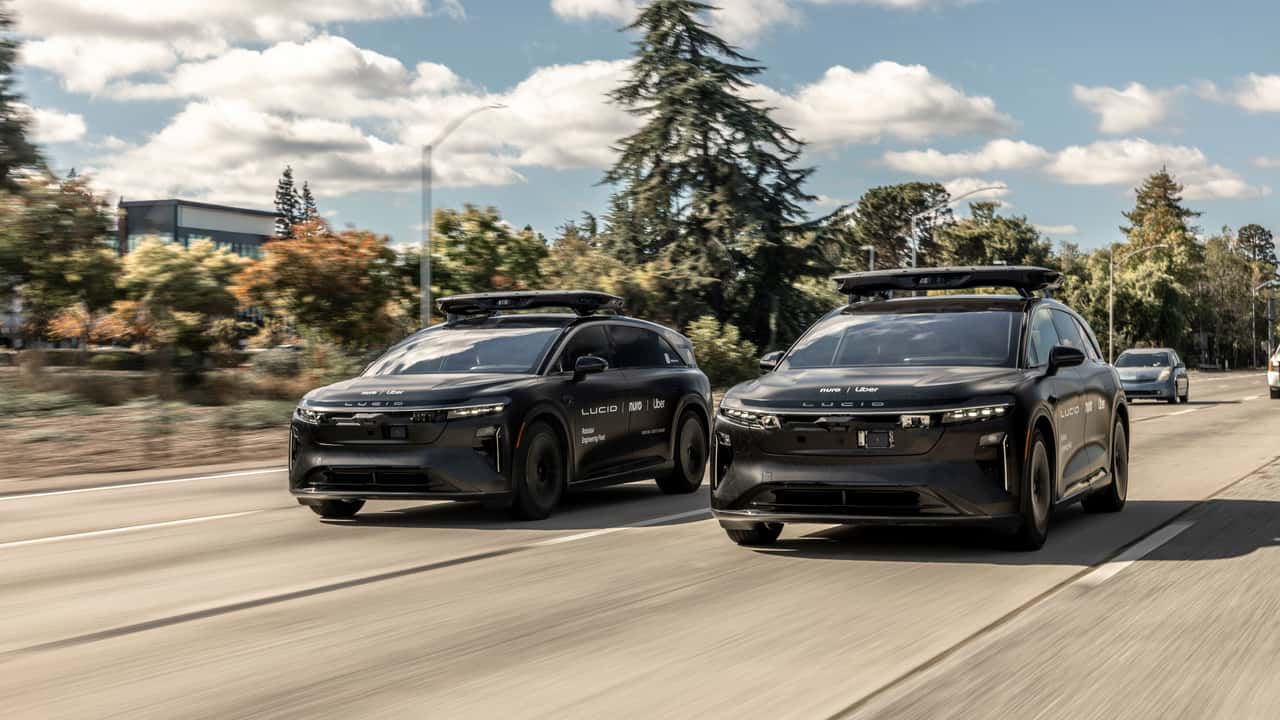
Lucid and Uber Partner to Launch Autonomous Taxis in Houston Texas
June 17, 2026
Share
Key Takeaways
Lucid and Uber are expanding their robotaxi partnership to Houston in mid-2027, utilizing the Lucid Gravity SUV with Nuro's self-driving technology, potentially paving the way for similar electric vehicle services in Canadian cities.
The Houston depot will feature 40 fast chargers, 15 service bays, and 4 megawatts of power, serving as a model for potential Canadian facilities and supporting the growth of autonomous driving and electric vehicle adoption.
The partnership between Lucid, Uber, and Nuro has grown significantly, with Uber committing to purchase up to 35,000 vehicles and increasing its investment in Lucid to $500 million, which could impact the Canadian electric vehicle market and pricing of EVs like the Lucid Gravity.
Lucid and Uber Expand Robotaxi Partnership to Houston
Lucid and Uber are set to expand their robotaxi partnership to Houston in mid-2027, marking a significant milestone in the growing market for autonomous driving in North America. This partnership is part of a larger collaboration between Lucid, Uber, and self-driving technology firm Nuro, which aims to deploy robotaxis based on the Lucid Gravity SUV in major U.S. cities, including San Francisco by the end of this year. Although there is no definitive timeline for Canadian availability, this development could potentially pave the way for similar robotaxi services in Canadian cities, where residents could benefit from the iZEV incentives and provincial rebates for purchasing electric vehicles.
Depot and Vehicle Details
The Houston depot, spanning 50,000 square feet, will be equipped with 40 fast chargers and 15 service bays, and will have access to four megawatts of power. This facility will serve as a centre for charging, cleaning, and maintaining the Lucid Gravity SUVs, which will be powered by Nuro's self-driving software and hardware. Lucid manufactures the vehicles, while Nuro is responsible for the autonomous driving technology. With the ability to charge and maintain a large fleet of vehicles, this depot will play a crucial role in supporting the expansion of robotaxi services in the region, potentially serving as a model for similar facilities in Canadian cities.
Growing Partnership and Ambition
The collaboration between Lucid, Uber, and Nuro has grown substantially since its inception, with Lucid delivering the first Gravity to Nuro eight months ago for engineering and testing purposes. Nuro's engineering fleet has since expanded to nearly 100 Gravitys, which have been mapping streets and collecting driving data in California and Texas. Uber has also increased its investment in Lucid, from $300 million to $500 million, and has committed to purchasing up to 35,000 vehicles from the company. As the Canadian government continues to promote the adoption of electric vehicles through initiatives like the iZEV program, which offers incentives of up to $5,000 for eligible vehicles, the potential for robotaxi services in Canada becomes increasingly viable.
Competition in the Autonomous Driving Market
The race to deploy driverless ride-hailing vehicles is heating up, with Waymo currently leading the market with its driverless taxis available in 11 U.S. cities. Amazon's Zoox has also launched its service, featuring steering wheel-free pods, and Uber has partnered with several companies, including Rivian, to deploy robotaxis. As the market continues to evolve, it will be interesting to see how these developments impact the Canadian automotive landscape, particularly in terms of pricing and availability of electric vehicles like the Lucid Gravity, which could potentially qualify for Canadian pricing and incentives. With the Canadian market poised for growth, companies like Lucid and Uber are well-positioned to capitalize on the increasing demand for electric and autonomous vehicles.