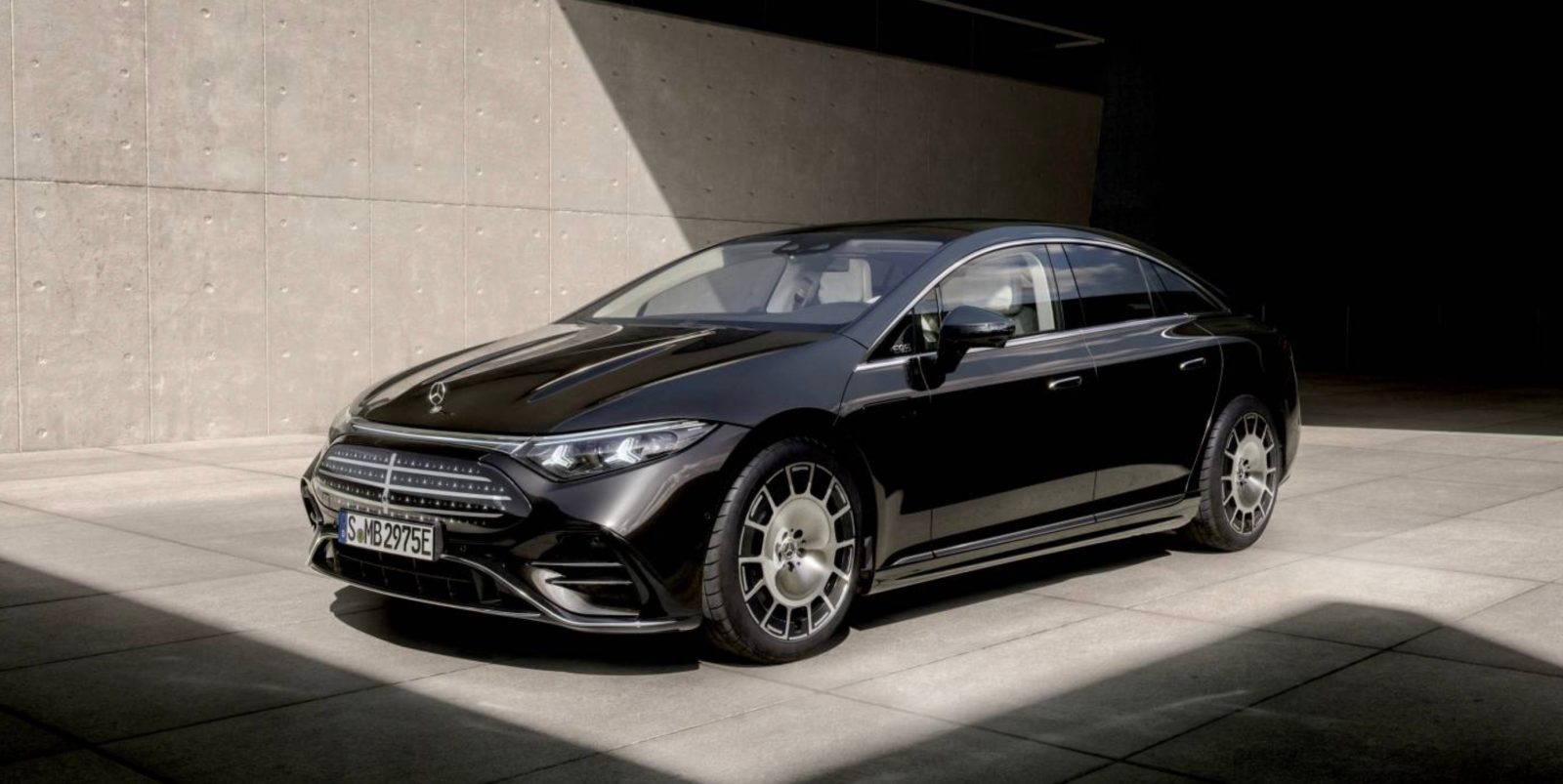
Mercedes-Benz Introduces New EQS Electric Car 926 km Range 800V Fast Charging Steer-by-Wire System
April 14, 2026
Share
Key Takeaways
Mercedes-Benz has heavily upgraded its EQS electric sedan, achieving a WLTP range of up to 926 km – a 13% improvement over its predecessor, making it a leading luxury EV option in Canada’s growing electric vehicle market
The new EQS features an advanced 800-volt architecture, enabling up to 350 kW DC fast charging, allowing the vehicle to gain approximately 320 km of range in just 10 minutes, ideal for Canadian highway trips
Mercedes has introduced a new entry-level EQS 400 variant with 270 kW output and a 112 kWh battery, positioned competitively against rivals like the BMW i7, with Canadian pricing pending but expected to benefit from substantial iZEV incentives and provincial rebates in Ontario, British Columbia, and Quebec
Mercedes-Benz Unveils Heavily Upgraded EQS Electric Sedan with Stunning 926 km Range
Mercedes-Benz has introduced a significantly revamped EQS electric sedan, boasting a WLTP range of up to **926 km** — a 13% improvement over its predecessor. This update marks the most substantial upgrade to Mercedes’ flagship EV since its launch in 2021 and positions it as a leading luxury electric option in Canada’s growing EV market.
Advanced 800-Volt Architecture and Rapid Charging
The new EQS features an entirely new **800-volt electrical architecture**, enabling **up to 350 kW DC fast charging**. This capability allows the vehicle to gain approximately **320 km** of range in just **10 minutes** — a game-changer for Canadian drivers tackling long distances or highway trips. Even when charging at older **400-volt stations**, the battery intelligently splits into two virtual halves, each charging at up to **175 kW**, ensuring fast topping-up remains possible.
Expanded Battery Capacity and Enhanced Materials
The battery pack has expanded from **118 kWh** to **122 kWh** of usable capacity while retaining the same physical dimensions. Mercedes achieved this increase by utilising **silicon oxide-graphite composite anodes**, which boost both gravimetric and volumetric energy density. Additionally, the cobalt content has been further reduced, aligning with global sustainability trends.
Next-Generation Electric Drive Units
The new **electric drive units (EDUs)** represent what Mercedes calls a “generational leap.” In all-wheel-drive models, the front EDU acts as a dedicated boost motor with an integrated disconnect unit that can instantly engage or disengage. A **two-speed gearbox** on the rear axle pairs a short first gear for strong launch performance with a long second gear optimised for highway efficiency.
Enhanced Regenerative Braking
Regenerative braking has been increased to **385 kW** — a **33%** boost — providing sufficient deceleration for most everyday situations without needing to use friction brakes. This enhancement contributes to the EQS’s impressive efficiency and range.
New EQS 400 Variant
Mercedes has introduced a new **entry-level EQS 400 variant**, offering **270 kW** of output and a **112 kWh** battery. While pricing for the Canadian market is yet to be announced, the German starting price of **€79,330** (net) — approximately **$103,000 CAD** including VAT — positions it competitively against rivals like the BMW i7, which starts at **$107,250** in the U.S. with a significantly shorter range.
Steer-by-Wire Technology
In a groundbreaking move, Mercedes has implemented **steer-by-wire technology** in the new EQS — a first for any German automaker in a production vehicle. Although this feature won’t be available at launch, Mercedes indicates it will arrive “a few months after market introduction.” The system eliminates the physical connection between the steering wheel and the front wheels, using electronic signals instead. This innovation allows for a flatter steering wheel design that enhances cabin space, improves visibility of the driver display, and makes entering and exiting the vehicle easier.
The steer-by-wire system works in tandem with the EQS’s **10-degree rear-axle steering** and includes redundant signal paths for safety. Even in the unlikely event of a complete system failure, the rear-axle steering and individual wheel braking via ESP can maintain directional control.
Advanced MB.OS and MBUX Infotainment
The new EQS operates on the **Mercedes-Benz Operating System (MB.OS)**, also debuting in the CLA. MB.OS integrates and controls every vehicle function and connects to the **Mercedes-Benz Intelligent Cloud** for over-the-air updates.
The **MBUX Virtual Assistant** now incorporates AI from Microsoft, enabling it to handle complex, multi-turn conversations. Drivers can choose from **three avatar options** — the classic star, a humanoid figure, and a character named “LittleBenz” — offering different interaction styles. The standard **141 cm-wide MBUX Hyperscreen** remains, and a redesigned **MBUX Zero Layer interface** allows for a customisable home screen with app folders, similar to a smartphone.
A new **MBUX Surround Navigation** feature utilisation the vehicle’s cameras and sensors to display a real-time **3D map** of the surroundings on the driver display. It shows other vehicles, cyclists, and pedestrians — essentially letting drivers see what the car’s sensors see.
Bidirectional Charging and Advanced Lighting
Mercedes has confirmed **bidirectional charging capability** for the new EQS, supporting both **vehicle-to-grid (V2G)** and **vehicle-to-home (V2H)** functions. However, this feature will be introduced via an over-the-air update after the vehicle’s launch, rather than at delivery.
The standard **DIGITAL LIGHT system** has been upgraded to **micro-LED technology**, delivering a **40% larger high-resolution light field** while consuming **50% less energy** than the previous system. The **ULTRA RANGE high beam** now reaches up to **600 metres**.
Adaptive Damper Control and Additional Features
A **cloud-based damper control system** for the **AIRMATIC air suspension** uses **Car-to-X data** shared by other Mercedes vehicles to pre-adjust damping before encountering speed bumps — a particularly useful feature for Canadian drivers navigating varied road conditions.
Canadian Availability and Incentives
While specific Canadian pricing and release dates are pending, Canadian drivers can anticipate enhanced **iZEV incentives** and **provincial rebates** that will make this luxury EV more accessible. Provinces like **Ontario, British Columbia, and Quebec** offer substantial rebates for electric vehicle purchases, further reducing the effective cost.
The heavily upgraded Mercedes-Benz EQS positions itself as a top contender in Canada’s luxury electric vehicle segment, combining cutting-edge technology, impressive range, and advanced safety features. With robust federal and provincial incentives, Canadian EV enthusiasts have much to look forward to.