Mercedes EV Sales Improve But One Market Drags Down Quarterly Results
April 10, 2026
Share
Key Takeaways
Mercedes-Benz faces a 6% global sales decline in Q1, primarily due to a 27% drop in China, but sees an 11% surge in EV sales reaching 50,400 units.
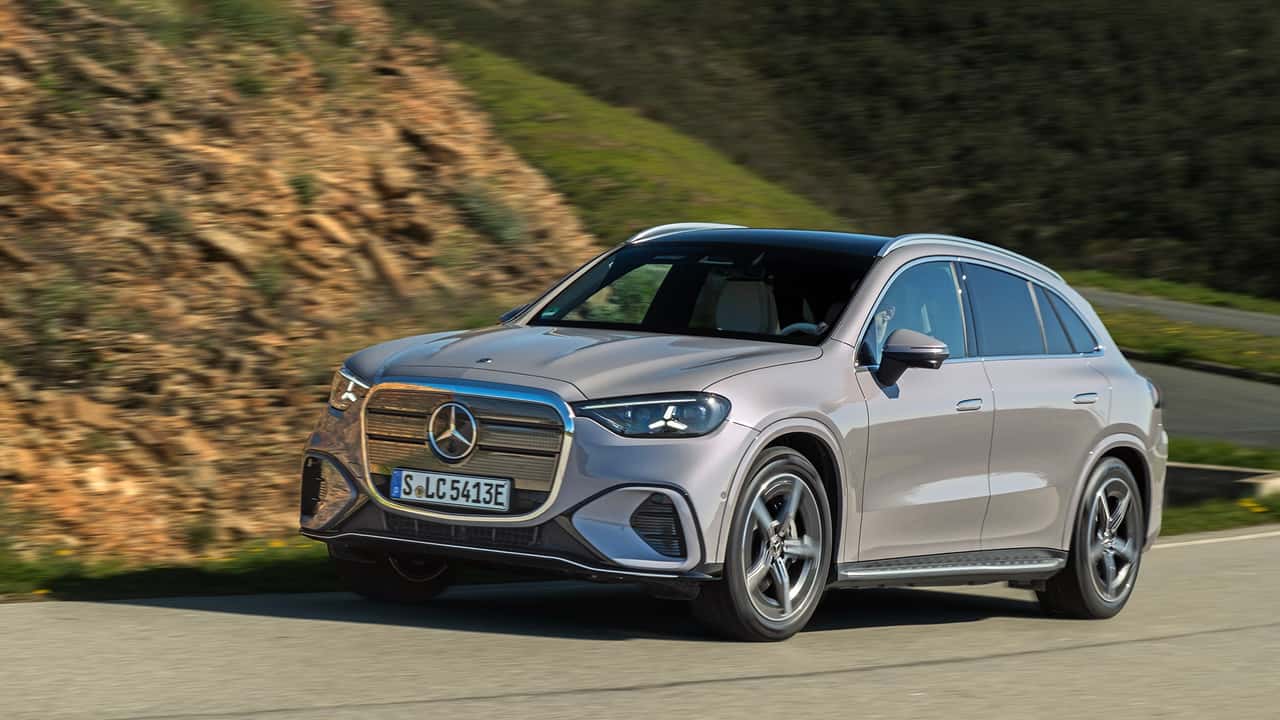
The brand's EV growth is driven by a 7% increase in Europe and a significant 20% rise in the U.S., buoyed by new-generation models like the CLA and GLC EV.
Mercedes is shifting to a more conservative EV design philosophy to broaden appeal, with upcoming models including the electric C-Class, E-Class, and S-Class.
Canadian EV buyers benefit from federal and provincial incentives like Ontario’s $4,000 rebate and British Columbia’s $3,500 rebate, making the transition to electric mobility more affordable.
The year 2026 is crucial for Mercedes-Benz with the rollout of several new EVs, potentially marking a significant turnaround for the brand in the electric vehicle market.
Mercedes-Benz Faces Global Sales Challenges but Sees EV Growth
Mercedes-Benz has encountered a rough start to the year, with global sales dipping by 6% in the first quarter. The decline is largely attributed to a 27% drop in China, where the brand is locked in a fierce price war with local premium manufacturers. Despite this setback, the automaker has seen a silver lining: its electric vehicle (EV) sales have surged by 11%, reaching 50,400 units. Of these, 44,300 were passenger cars.
The increase in EV sales is thanks to a 7% improvement in Europe and a significant 20% rise in the United States, following a 19% decline in the fourth quarter of 2025. These gains have helped mitigate the drop in China, which Mercedes describes as a “transitional year.” During this period, the brand will phase out older models and prepare their replacements.
This transition isn’t limited to China; Mercedes is renewing its lineup globally. The introduction of new-generation EVs, such as the CLA and electric GLC, has been well-received, with strong buyer interest. Recently, I had the opportunity to drive the new GLC EV, and it was evident that Mercedes is taking a more conservative approach with its EVs. The goal is to make them feel like any other model in the lineup, a departure from the unique design of its current EQ lineup, which may have been too unconventional for the average Mercedes buyer.
The CLA EV marked the beginning of Mercedes’ shift towards a more conservative design philosophy. The current EQ models, often compared to jellybeans, did not sell as well as anticipated, partly due to early calibration issues—such as the peculiar brake pedal feel in early EQS models. Although these issues have been addressed over time, Mercedes is still struggling to move these units. To boost appeal, the brand is giving its older EQ models a mid-lifecycle facelift. For the EQS, this includes numerous changes and the addition of optional steer-by-wire technology. However, to truly capture the market, Mercedes may need to start fresh with models that have broader appeal.
The next significant addition to Mercedes’ EV lineup is the electric C-Class, which shares its underpinnings and design language with the GLC EV. It sports a classic Mercedes sedan look, with subtle fastback and coupe influences towards the rear. Following the C-Class, Mercedes plans to launch the electric E-Class and S-Class. Both will be built on the exclusive 800-volt MB.EA architecture, distinct from its combustion engine models, and are expected to continue the more conservative design direction.
Mercedes is also breaking new ground with the VLE, an ultra-luxurious people mover it refers to as a “grand limousine.” Having seen the VLE in person, it’s clear that it offers significant improvements in performance, luxury, and features compared to the V-Class, which remains the preferred VIP shuttle in many regions.
The year 2026 will be pivotal for Mercedes-Benz EVs, with the rollout of the GLC EV, GLB EV, VLE, and electric C-Class. AMG is also anticipated to unveil the production version of the GT XX Concept before the end of the year. The positive first quarter for Mercedes’ electric models could mark the beginning of a significant turnaround as these new EVs hit the market.
For Canadian drivers, this is exciting news. With federal and provincial incentives such as the iZEV program, the cost of going electric is more manageable. For example, Ontario offers up to $4,000 off for new EV purchases, while British Columbia provides a rebate of up to $3,500. These incentives, combined with the expanding EV lineup from Mercedes-Benz, make the transition to electric mobility more accessible for Canadians. Keep an eye out for Canadian pricing and availability as these new models roll out.