Tesla Requires Drivers to Pass Quiz for European FSD Activation
April 13, 2026
Share
Key Takeaways
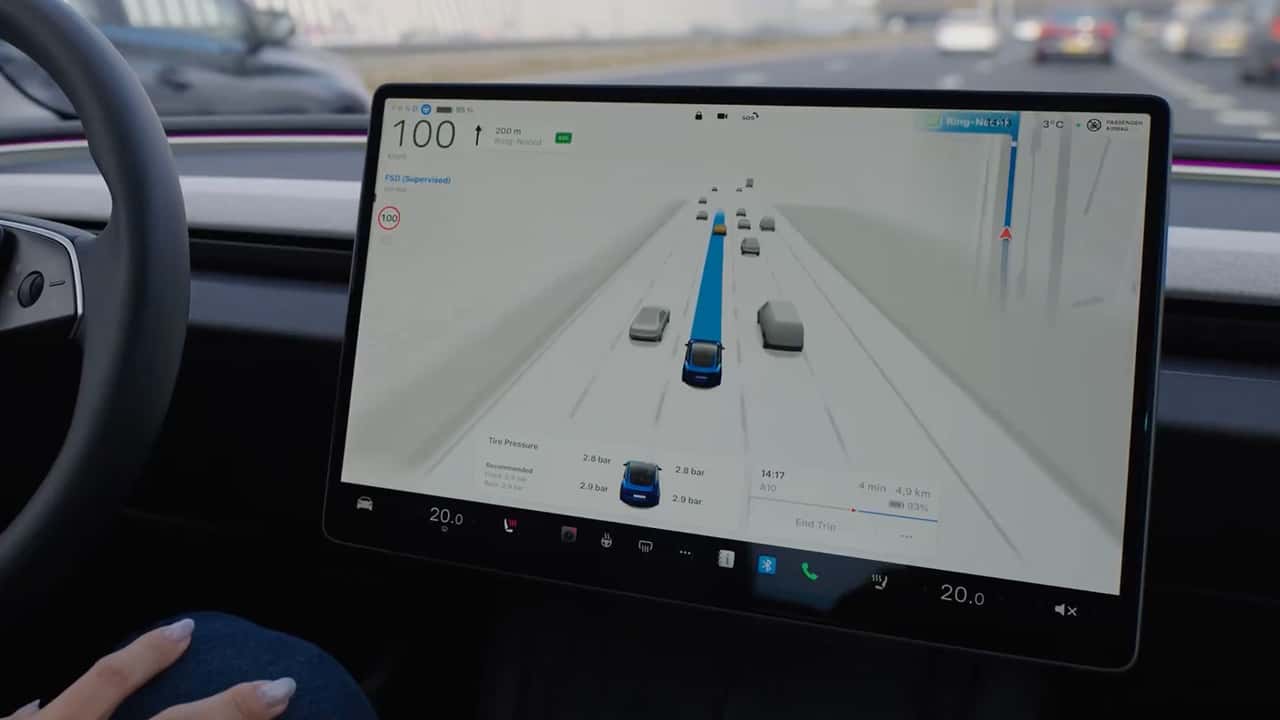
Tesla has launched its Full Self-Driving (FSD) (Supervised) software in the Netherlands, marking the first European country to approve its deployment and requiring drivers to complete a safety tutorial and quiz.
The FSD activation process includes an in-car tutorial and a two-question quiz to ensure drivers understand their ongoing responsibilities, aligning with UN-R171 standards for driver-assistance systems.
While FSD is currently available only in the Netherlands, Tesla’s compliance with UN-R171 standards may streamline regulatory approval in other EU countries and potentially Canada in the future.
Canadian drivers can benefit from provincial EV incentives such as Ontario’s $5,000 iZEV program, British Columbia’s up to $3,500 rebates, and Quebec’s $4,000 RÉVE program, making future FSD-enabled EVs more affordable.
The expansion of Tesla’s FSD to Canada remains pending, but progress in Europe signals a potential path for future availability, encouraging Canadian EV owners to monitor regulatory updates and incentives.
Tesla’s Full Self-Driving (Supervised) Now Available in the Netherlands, with a Quiz for Canadian Drivers
Tesla has finally rolled out its Full Self-Driving (FSD) (Supervised) software in Europe, with the Netherlands being the first country to approve its deployment. For Canadian drivers eyeing this technology, it’s important to note that while the Netherlands has taken the lead, Tesla is working towards expanding FSD to other markets, potentially including Canada in the future.
Activation Tutorial and Quiz
To activate FSD in the Netherlands, Tesla has introduced the “FSD (Supervised) Activation Tutorial.” This mandatory in-car safety training must be completed before using the driver-assistance feature. Drivers are required to pass a short quiz at the end of the tutorial, ensuring they understand their responsibilities while using FSD.
The tutorial explains the controls and interface of FSD, detailing what each button does and how to recognise when the system is active. The two-question quiz focuses on the driver’s accountability and understanding of the user interface. Although these questions are straightforward, they underscore a crucial point: the driver is always responsible for the vehicle, even when using assistance features like Autopilot and FSD, which are classified as Level 2 driver-assistance systems.
Meeting UN-R171 Standards
Tesla’s approval to deploy FSD in the Netherlands required the company to meet UN-R171 standards. These standards mandate that drivers be educated on the performance of driver-assistance systems to prevent misinterpretation or overestimation of the software’s capabilities. The tutorial and quiz are designed to meet this requirement, clearly stating that the driver remains accountable and should not treat the vehicle as fully autonomous.
Implications for Canada
Although FSD is currently only available in the Netherlands, Tesla’s compliance with UN-R171 standards simplifies the process for obtaining regulatory approval in other EU countries that have adopted the same standards. This progress is a significant step toward Tesla’s goal of making FSD available globally, and it could eventually pave the way for Canadian availability.
For Canadian drivers, it’s essential to stay informed about provincial rebates and incentives for electric vehicles (EVs). Programs such as the iZEV (Income Zoom Electric Vehicle) incentives in provinces like Ontario, British Columbia, and Quebec offer financial support for purchasing EVs, which could make adopting future FSD-enabled vehicles more affordable.
Canadian EV Incentives
Many Canadian provinces offer robust rebates and incentives to encourage EV adoption. For example:
- **Ontario**: Up to $5,000 through the iZEV program.
- **British Columbia**: Up to $3,500 through the EV rebates.
- **Quebec**: Up to $4,000 through the RÉVE program.
These incentives, combined with federal rebates, can significantly reduce the cost of purchasing an EV, making advanced technologies like FSD more accessible in the future.
Looking Ahead
As Tesla continues to work towards global expansion of FSD, Canadian drivers can anticipate potential future availability. Keeping an eye on regulatory developments and taking advantage of existing EV incentives will position Canadian EV owners well for when FSD becomes an option north of the border.