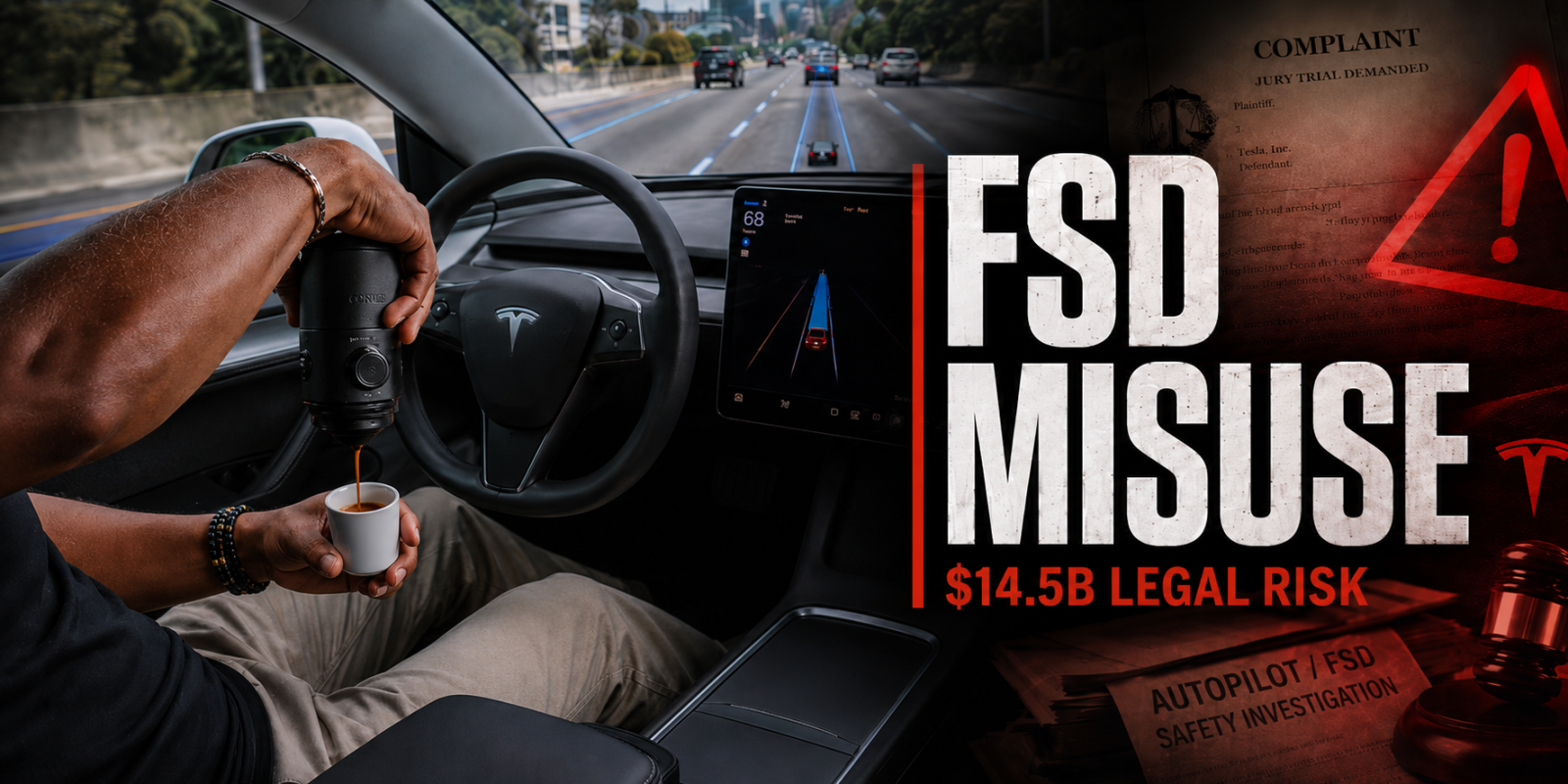
Tesla promotional videos show unsafe use of Full Self Driving technology posing legal issues
June 11, 2026
Share
Key Takeaways
Tesla faces $14.5 billion in lawsuits related to its "Full Self-Driving" (FSD) and Autopilot systems in the US, with its marketing strategy under scrutiny for contradicting the company's legal defence and potentially impacting Canadian electric vehicle sales.
The company's promotional videos have raised concerns, showcasing a driver making espresso while FSD drives and committing traffic violations in Denmark, which could weaken Tesla's defence in court and affect its reputation among Canadian EV buyers.
Canadian Tesla owners may be eligible for the iZEV incentive, a federal rebate of up to $5,000, but the controversy surrounding FSD may impact sales, with Tesla models starting at around $50,000 in Canada and subject to provincial regulations and consumer expectations.
Tesla's Marketing Strategy Under Fire Amidst Lawsuits
Tesla is facing a daunting $14.5 billion in lawsuits related to its "Full Self-Driving" (FSD) and Autopilot systems in the United States. The company's marketing department has been criticized for exacerbating the issue with promotional videos that contradict its legal defence. In Canada, Tesla owners may be eligible for the iZEV incentive, a federal rebate of up to $5,000 for purchasing an electric vehicle, but the controversy surrounding FSD may impact the company's reputation and sales. Recently, two official promotional videos published by Tesla have sparked concern, showcasing a driver making espresso while FSD drives and committing multiple traffic violations in Denmark.
Promotional Videos Raise Eyebrows
The first video, posted on May 26, features a driver operating a portable espresso machine while FSD Supervised drives, with the caption: "I do my espresso while I'm driving." The video, which has garnered 5.6 million views, encourages users to "try" FSD, despite the fine print disclaimer stating that the feature requires active driver supervision. This contradiction has been noted by experts, who argue that the video's message undermines Tesla's legal defence. In Canada, where Tesla's FSD technology is available, drivers are advised to exercise caution and follow provincial regulations, such as those in Ontario, where the government offers a rebate of up to $1,000 for electric vehicle purchases.
Traffic Violations in Denmark
A second promotional video, posted on June 9, celebrates FSD's approval in Denmark, the fourth European country to approve the system. However, the video shows FSD committing multiple traffic violations, including driving in a bus-only lane, making an illegal right turn, and ignoring a "no entry" sign. Danish authorities have expressed concern over the footage, with FDM, Denmark's equivalent of the Canadian Automobile Association (CAA), calling the findings "worrying" and "quite critical." Canadian drivers can learn from this example, as similar traffic laws apply in provinces like British Columbia, where electric vehicles are popular.
Legal Implications
Tesla's legal strategy in Autopilot and FSD crash lawsuits relies on the argument that drivers are responsible for supervising the system at all times. However, the company's promotional content appears to encourage the opposite behaviour, which could weaken its defence in court. With over 80 documented FSD traffic violations already on file with the National Highway Traffic Safety Administration (NHTSA), Tesla faces significant litigation exposure. In Canada, where the company has faced lawsuits related to FSD, Tesla may need to revisit its marketing strategy to avoid similar issues.
Consequences for Tesla
The controversy surrounding FSD has already led to a devastating court verdict, with a jury awarding $243 million to the victims of a fatal Autopilot crash. Tesla has also quietly settled several Autopilot crash lawsuits rather than face another jury. As the company navigates these challenges, it must balance its marketing efforts with the need to provide clear guidelines and warnings to drivers about FSD's limitations. In Canada, where electric vehicles are gaining popularity, Tesla must be mindful of provincial regulations and consumer expectations to maintain its market share and reputation. With Canadian pricing for Tesla models starting at around $50,000, the company must ensure that its marketing strategy aligns with the country's unique market conditions and regulatory framework.