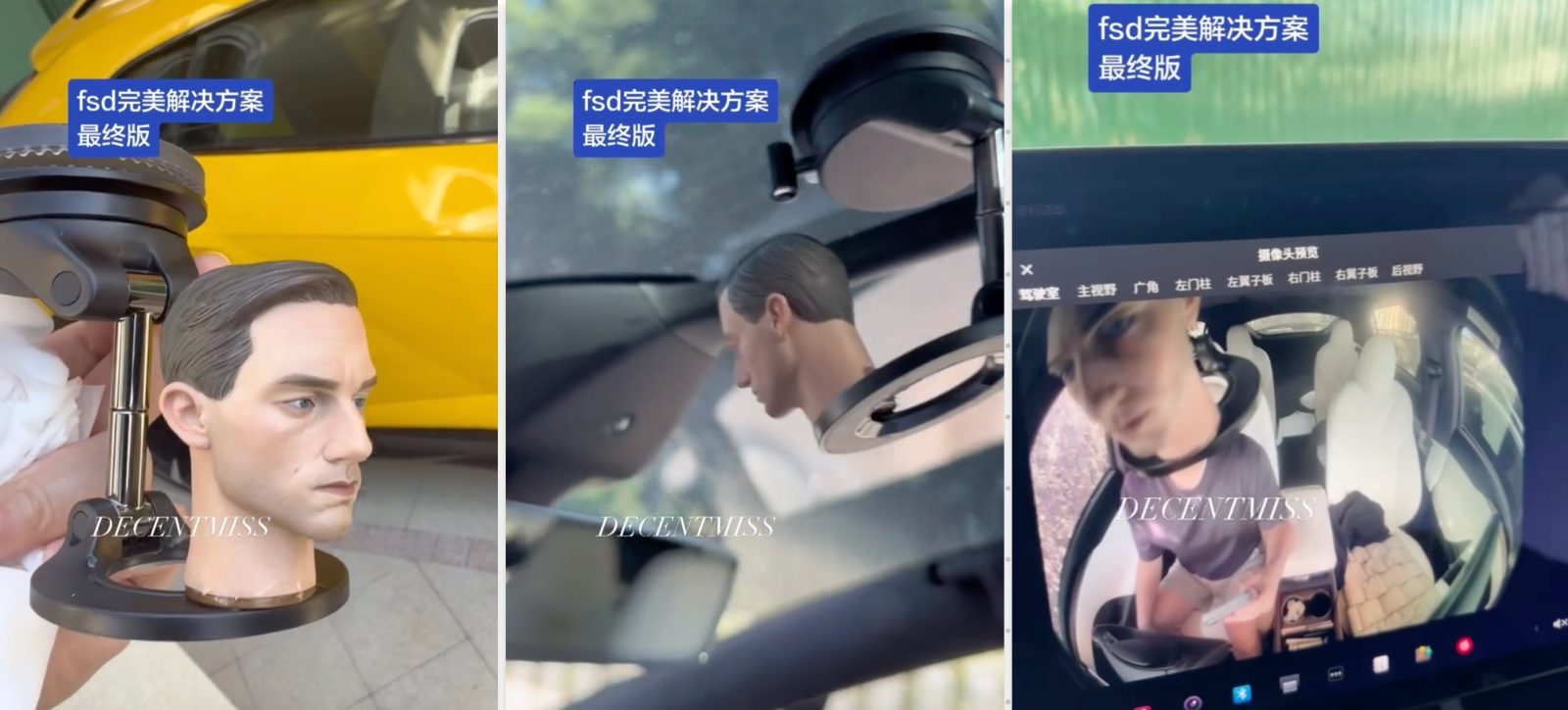
Tesla Self Driving System Fooled by Cheap Mannequin Heads
June 15, 2026
Share
Key Takeaways
A concerning trend has emerged in China where Tesla drivers are using tiny plastic doll heads to trick the cabin camera into thinking they are paying attention while using Autopilot and "Full Self-Driving" features, highlighting a serious issue with Tesla's driver monitoring system in electric vehicles.
The plastic doll heads, marketed as "travel companions" and "dashboard decorations," can be purchased for as little as $20 to $50, and can satisfy the system's detection criteria, allowing drivers to operate their vehicle without paying attention to the road, posing a significant risk to road safety in Canada.
Canadian Tesla owners may be eligible for incentives such as the iZEV program, which offers a rebate of up to $5,000 for eligible electric vehicles, but the onus is on manufacturers like Tesla to ensure their vehicles are safe for Canadian roads, with a range of up to 320 kilometres for the Tesla Model 3.
Concerns Over Tesla's Driver Monitoring System in Canada
Canadian Tesla owners may be interested to know that a concerning trend has emerged in China, where drivers are using tiny plastic doll heads to trick the cabin camera into thinking they are paying attention while using Autopilot and "Full Self-Driving" (Supervised) features. These devices, marketed as "travel companions" and "dashboard decorations," can be purchased for as little as $20 to $50. While this may seem like an absurd story, it highlights a serious issue with Tesla's driver monitoring system, which can have significant implications for road safety in Canada.
The Issue with Tesla's Driver Monitoring System
Tesla's driver monitoring system uses a cabin camera to track head position and eye movement, ensuring drivers keep their eyes on the road. However, a strategically placed plastic head with forward-facing features can apparently satisfy the system's detection criteria, allowing drivers to operate their vehicle without paying attention to the road. This is a significant concern, as it can lead to accidents and put the lives of drivers and other road users at risk. Canadian drivers who purchase Tesla vehicles may be eligible for incentives such as the iZEV program, which offers a rebate of up to $5,000 for eligible electric vehicles, but this does not excuse the need for robust safety features.
A Pattern of Behaviour
This is not an isolated issue, as Tesla drivers have a history of trying to defeat safety monitoring systems. The first generation of defeat devices included steering wheel weights designed to trick the torque sensor into believing someone was holding the wheel. While Tesla has expanded its driver monitoring to include the cabin camera, it is clear that the system is not robust enough to prevent drivers from finding ways to defeat it. Canadian provinces such as British Columbia and Quebec offer additional rebates for electric vehicle purchases, but the onus is on manufacturers like Tesla to ensure their vehicles are safe for Canadian roads.
Consequences of Defeating Safety Systems
The consequences of driving without attention on a Level 2 system are not theoretical. Tesla's Autopilot and FSD (Supervised) are not autonomous and require a human driver to supervise and take over at any moment. There have been numerous incidents of Tesla vehicles crashing while using these features, including a Tesla on FSD that crashed through a railroad gate seconds before a train arrived. Canadian drivers who use these features must be aware of the risks and take steps to ensure they are using them safely and responsibly, including following all applicable laws and regulations, such as those related to distracted driving.
Conclusion
In conclusion, the use of fake heads to defeat Tesla's driver monitoring system is a serious concern that highlights the need for more robust safety features. While Tesla deserves credit for attempting to prevent drivers from defeating its safety monitoring, it is clear that more needs to be done to address this issue. Canadian drivers who are considering purchasing a Tesla vehicle should be aware of the potential risks and take steps to ensure they are using the vehicle's features safely and responsibly, including staying within the recommended range of their vehicle's charging capabilities, typically around 320 kilometres for the Tesla Model 3. By prioritizing safety and responsible driving practices, we can help to prevent accidents and ensure that our roads remain safe for everyone.