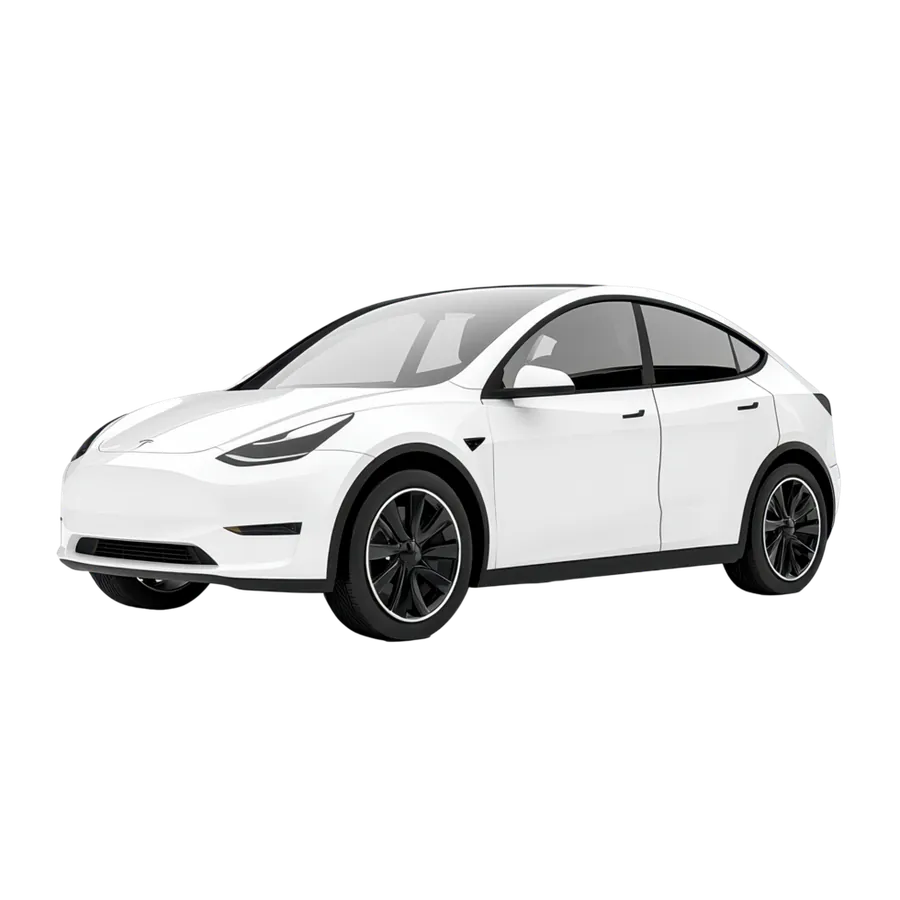
Tesla vs the World: How Competition Is Reshaping Canada's EV Market
April 16, 2026
Share
Key Takeaways
Tesla's market share has fallen from 65% to below 50% as new competitive models enter the market
Average new BEV transaction prices have fallen 12% since 2022 due to increased competition
Over 70 different BEV and PHEV models are now available in Canada, giving buyers more choices
Public charging infrastructure has grown by over 80% since 2022 with over 50,000 chargers now available
Provincial incentives stack with federal rebates in Quebec, BC, PEI, and Nova Scotia, saving buyers over C$12,000 on eligible models
Canada's electric vehicle market is undergoing a seismic shift as legacy automakers and new entrants aggressively challenge Tesla's dominance. After years of Tesla leading sales and capturing most of the attention, 2024 and 2025 are seeing a rapid rise in competitive models that are changing buyer expectations, pricing dynamics, and the very landscape of EV ownership in this country.
This evolution matters because it directly affects every Canadian considering an EV purchase. More competition means better value propositions, wider model choices, improved charging infrastructure, and — crucially — models that better fit Canadian driving conditions like harsh winters and long-distance highway travel. For buyers, this is a golden era: never before have there been so many compelling electric options at competitive prices.
Key Highlights
Tesla held roughly 65% of Canada’s BEV market in 2022 but that share has fallen to below 50% in 2024 as new models enter the market.
Average transaction prices for new BEVs have fallen by approximately 12% since 2022 thanks to increased competition and improved supply chain efficiencies.
New EV models now offer longer ranges — the Volvo EX90 claims {vehicle:volvo-ex90:range.claimed} km, surpassing the Tesla Model S Plaid's {vehicle:tesla-model-s-plaid:range.claimed} km.
Charging infrastructure is expanding rapidly, with over 50,000 public chargers now available across Canada — up more than 80% from 2022.
Provincial incentives stack with the federal iZEV rebate in Quebec, BC, PEI, and Nova Scotia, making total savings exceed C$10,000 on many new BEVs.
Legacy automakers are now offering competitive total cost of ownership figures — a Ford Mustang Mach-E with 20,000 km/year driving costs about C$1,400 less annually than a comparable Tesla Model Y after incentives and electricity costs.
What This Means for Canadian Buyers
The rising competition from established automakers and new EV specialists is a boon for Canadian buyers. Where Tesla once offered a small set of high-tech but often premium-priced models, today’s market features diverse options that cater to different needs, budgets, and preferences.
For buyers prioritizing range and winter performance, models like the Volvo EX90 and BMW iX now offer superior cold-weather range and robust heating systems. Those on a budget will find compelling value in the Hyundai Ioniq 5 and KIA EV6, which deliver strong ranges and premium features at competitive prices. And buyers who value brand heritage or dealer support will find attractive options from Ford, Volkswagen, and others.
Incentive availability remains a critical factor. Quebec, BC, PEI, and Nova Scotia all offer provincial rebates that stack with the federal iZEV rebate, potentially saving buyers over C$12,000 on eligible models. Ontario and Alberta currently offer no provincial rebates, making the federal C$5,000 incentive the primary savings driver — though this could change with upcoming provincial elections.
Impact on the Canadian EV Market
The influx of competitive EV models is reshaping Canada’s automotive landscape in several key ways. First, it’s driving down prices. As more manufacturers compete for market share, we’re seeing aggressive pricing strategies, especially on base trims. The average transaction price for a new BEV in Canada has fallen by roughly 12% since 2022.
Second, it’s expanding consumer choice. Where Tesla once dominated with just a few models, today Canadian shoppers can choose from over 70 different BEVs and PHEVs. This includes everything from compact hatchbacks to large SUVs and luxury sedans. The diversity of options means Canadians can now find an EV that better matches their lifestyle, whether that’s a compact city car, a family SUV, or a performance-oriented sedan.
Third, it’s accelerating charging infrastructure development. With more models on the road and more consumers demanding convenient charging solutions, private companies and governments are investing heavily in public charging networks. Canada now has over 50,000 public chargers — up more than 80% from 2022 — with major investments from FLO, Electrify Canada, and Tesla’s Supercharger network. This improved infrastructure makes long-distance travel and daily charging far more convenient.
Provincial differences remain significant. Quebec continues to lead in EV adoption thanks to its strong government support, extensive charging network, and Hydro Québec’s low electricity rates. Ontario and BC follow with strong policies and growing infrastructure, while other provinces are playing catch-up. Government policy remains a critical driver — Canada’s ZEV mandate requires automakers to sell a growing percentage of zero-emission vehicles, which is accelerating model development and launch timelines.
Explore the latest EV models available in Canada: Browse all EVs →
Frequently Asked Questions
Q: Is Tesla still the best-selling EV in Canada?
A: Tesla remains the best-selling EV make in Canada, but its market share has fallen significantly. The Tesla Model 3 is still the top-selling individual model, but competitors like the Hyundai Ioniq 5 and KIA EV6 are closing the gap.
Q: How do EV incentives work in different provinces?
A: The federal government offers a C$5,000 rebate on eligible BEVs under C$55,000 and C$2,500 on qualifying PHEVs. Quebec offers up to C$7,000, BC up to C$4,000, Nova Scotia C$3,000, and PEI C$5,000. Ontario and Alberta currently offer no provincial rebates. Always verify eligibility on Transport Canada’s iZEV website and your provincial energy ministry’s site.
Q: Are EV prices coming down in Canada?
A: Yes. Increased competition and improved supply chains have driven down average transaction prices by about 12% since 2022. Models like the Hyundai Ioniq 5 and KIA EV6 now offer strong features at competitive prices.
Q: How does winter affect different EV models?
A: All EVs lose range in cold weather, but some handle it better than others. Models with heat pumps — like the Volvo EX90, BMW iX, and Tesla Model Y — maintain much better range than those relying on resistive heating. Pre-conditioning your battery while plugged in is also crucial for maximizing winter range.
Q: Which provinces have the best EV charging infrastructure?
A: Quebec, Ontario, and BC have the most developed charging networks thanks to strong government support and private investment. FLO, Electrify Canada, and Tesla Superchargers provide wide coverage in these provinces. Other provinces are improving rapidly but still lag in rural and remote areas.
Q: Should I wait for the next Tesla update or buy a competing model now?
A: This depends on your priorities. If you value Tesla’s Supercharger network and software features, waiting for updates might make sense. However, competing models now offer comparable or better ranges, faster charging, and often better value after incentives. Given the rapid pace of change, buying now means locking in today’s competitive prices and avoiding potential future delays.