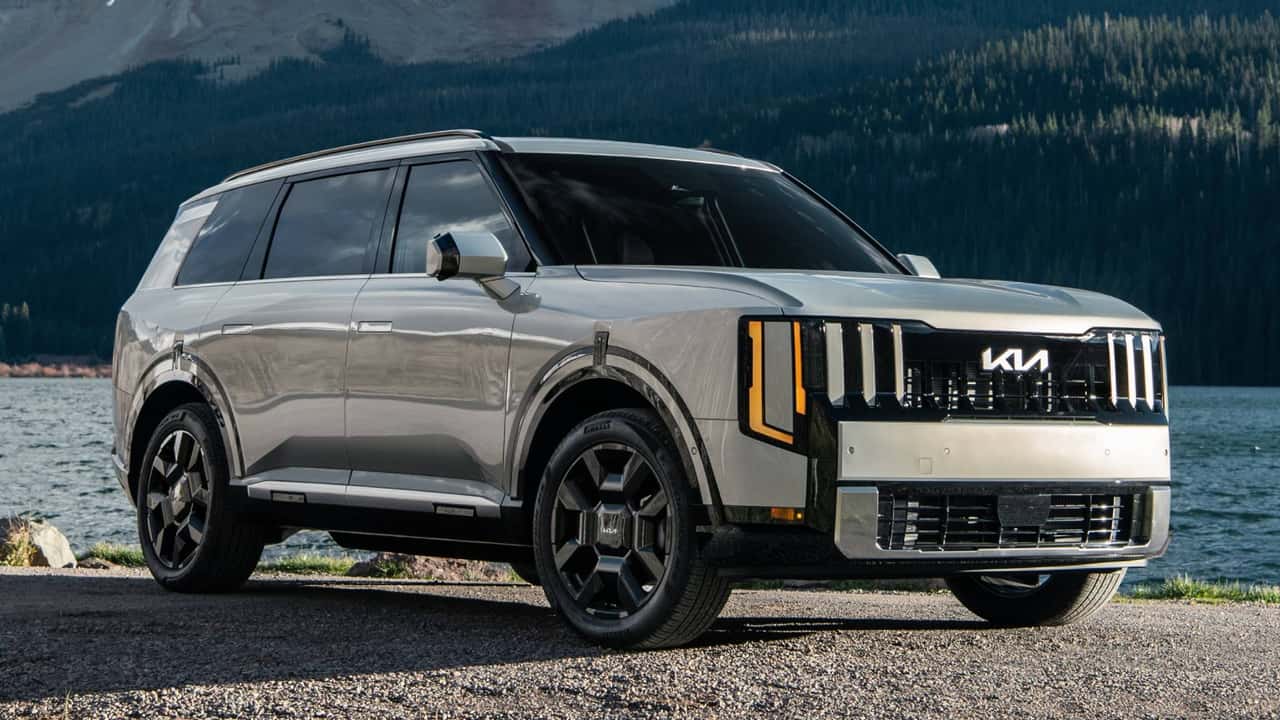
Kia Telluride Hybrid Released EREV Option Coming in 2029
April 9, 2026
Share
Key Takeaways
Kia plans to launch a body-on-frame pickup truck and an EREV version of the Telluride SUV in Canada by the end of the decade, joining the trend of automakers embracing extended-range electric vehicles (EREVs) in North America.
The new body-on-frame truck is expected to arrive in Canada by 2030, marking Kia's first foray into the Canadian pickup market with a model similar to the Tasman sold in other regions; an EREV Telluride is slated for 2029.
EREV technology, which combines electric motors with a gasoline generator, is seen as a cost-effective alternative for large vehicles like trucks and SUVs, potentially offering a combined range of over 1,000 kilometres.
Kia aims to expand its hybrid lineup in Canada from five current models to eight by the end of the decade, including new hybrid versions of the Seltos, K5, K4, and an unnamed pickup truck.
By the end of the decade, Kia targets global annual sales of 4.13 million units, with 1.15 million being hybrids (including EREVs) and 1 million being fully electric vehicles (EVs), while Canadian drivers can benefit from provincial incentives for electric and hybrid vehicles.
Kia is setting its sights on the Canadian auto market with ambitious plans to launch both a body-on-frame pickup truck and a new version of the Telluride three-row SUV by the end of the decade. These models will be available as hybrids and extended-range electric vehicles (EREVs), the automaker announced during its 2026 CEO Investor Day in Seoul.
“EVs, HEVs, autonomous driving, and robotics will serve as key drivers for Kia’s fastest growth to date,” said Kia President and CEO Ho Sung Song at the event.
As EV sales in North America face challenges due to fluctuating demand and changing policies, many car companies are focusing more on conventional hybrids and exploring new ways to electrify their vehicles, such as EREVs. Ford, Jeep, Ram, and Scout Motors have all confirmed EREV plans for the North American market. Kia is now the latest automaker to join this trend. These vehicles can be refueled like a gasoline car and recharged like an EV, offering the advantages of both powertrains. Electric motors power the wheels, while a gasoline generator provides backup power when the battery runs low.
The new body-on-frame truck is expected to arrive in Canada by 2030, Kia announced. Kia already sells the Tasman pickup in Australia, the Middle East, South America, and Africa, so this would be the first time it’s bringing that body style to Canada. Its sister brand, Hyundai, revealed the Boulder body-on-frame SUV concept at the New York Auto Show last week. It’s a full-size SUV with design cues reminiscent of the Ford Bronco and the Land Rover Defender. Although Hyundai hasn’t confirmed the Boulder’s powertrain, it could feature the same EREV technology, given the extensive technology-sharing between the two companies.
Kia launched the Telluride hybrid earlier this year in Canada. An EREV version of the Telluride is slated to arrive by 2029, the company revealed at the investor event. However, Kia has not released any specific details or specifications beyond this announcement. Last year, Hyundai also announced plans for an EREV with a combined range of over 1,000 kilometres, but without providing any further specifics.
EREV technology is particularly well-suited for large, boxy vehicles like trucks and three-row SUVs. This is because the large batteries required for full electrification of such vehicles are costly and significantly increase the final price for consumers. In theory, an EREV would require a smaller battery, making it a more cost-effective solution.
Kia also plans to expand its hybrid lineup in Canada from five current models to eight by the end of the decade. The Niro, Sorento, Sportage, Carnival, and Telluride are already available in hybrid form. They will be joined by the Seltos Hybrid this year, as well as hybrid versions of the K5, K4, and the yet-to-be-named pickup truck.
By the end of the decade, Kia aims for annual sales of 4.13 million units globally. The company expects 1.15 million of these to be various types of hybrids (including EREVs) and 1 million to be fully electric vehicles (EVs).
Canadian drivers can also take advantage of various incentives for purchasing electric and hybrid vehicles. Programs such as the iZEV (Innovation and Zero-Emission Vehicles) incentive in British Columbia, Ontario’s EV incentive program, and Quebec’s Réseau électrique véhicule zero émission (REVE) offer financial assistance to help offset the cost of new electric and hybrid vehicles. Additionally, many provinces offer tax credits, rebates, and other incentives to encourage the adoption of zero-emission vehicles.
For more detailed information on specific provincial incentives, Canadian consumers are encouraged to visit their local provincial websites or contact Kia Canada directly.