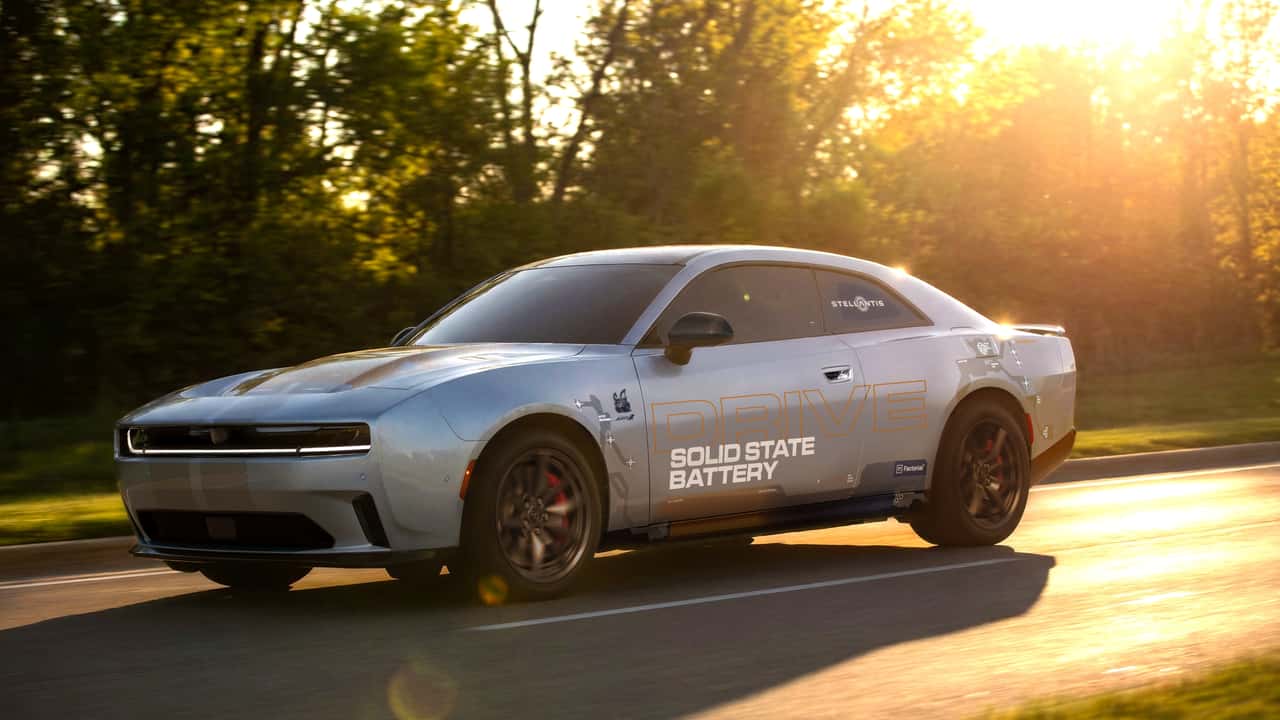
Dodge Charger Electric Vehicle Prototype Features Experimental Semi Solid State Battery
June 11, 2026
Share
Key Takeaways
Stellantis has begun real-world testing of semi-solid-state batteries in a Dodge Daytona Charger EV in Canada, aiming to improve range, charging speed, and affordability for Canadian electric vehicle (EV) owners.
The semi-solid-state battery pack boasts an energy density of 375 watt hours per kilogram, enabling faster charging times, such as 15-90% in 18 minutes, and potentially longer ranges for Canadian EV drivers.
The successful development and testing of these batteries may lead to greater adoption of electric vehicles in Canada, contributing to reduced greenhouse gas emissions and helping the country meet its climate goals, with potential availability in the Canadian market expected to accelerate the transition to EVs.
Stellantis Begins Real-World Testing of Semi-Solid-State Batteries in Canada
Stellantis, the parent company of well-known Canadian brands such as Jeep, Ram, and Dodge, has commenced real-world tests of semi-solid-state batteries in a Dodge Daytona Charger EV. This development is significant for the Canadian electric vehicle (EV) market, as it may lead to improved range, faster charging, and lower costs for Canadian consumers. The company has partnered with Massachusetts-based startup Factorial Energy to integrate a semi-solid-state battery pack into the vehicle, which will undergo testing to validate its safety, performance, and reliability under various Canadian driving conditions.
Potential Benefits for Canadian EV Owners
The semi-solid-state battery pack boasts an impressive energy density of 375 watt hours per kilogram, exceeding the typical range of conventional lithium-ion batteries. This could translate to longer ranges and faster charging times for Canadian EV owners, making electric vehicles an even more attractive option for daily commutes and road trips across the country. Additionally, the potential for lower costs may make EVs more accessible to Canadian buyers, particularly when combined with incentives such as the iZEV program and provincial rebates offered in certain regions, including British Columbia and Quebec.
Technical Details and Testing
The battery pack features Factorial's FEST cell with a semi-solid-state chemistry, which can charge from 15-90% in just 18 minutes and operate across a temperature range of -22 degrees Fahrenheit to 113F. This is a notable improvement over the current Daytona's lithium-ion pack, which charges from 10-80% in roughly 30 minutes. The real-world testing will help Stellantis fine-tune and validate the pack's performance, ensuring it meets the demands of Canadian drivers who often face varied and extreme weather conditions, from the cold winters in Alberta to the hot summers in Ontario.
Implications for the Canadian EV Market
As Stellantis continues to develop and test semi-solid-state batteries, Canadian consumers can expect to see improvements in EV technology, including increased range and faster charging times. This may also lead to greater adoption of electric vehicles in Canada, contributing to a reduction in greenhouse gas emissions and helping the country meet its climate goals. With the Canadian government offering incentives such as the iZEV program, which provides a rebate of up to $5,000 for eligible EV purchases, the development of semi-solid-state batteries may further accelerate the transition to electric vehicles in Canada. The testing of these batteries in a Dodge Daytona Charger EV is a significant step towards making EVs more accessible and appealing to Canadian buyers, and their eventual availability in the Canadian market may be a game-changer for the industry.