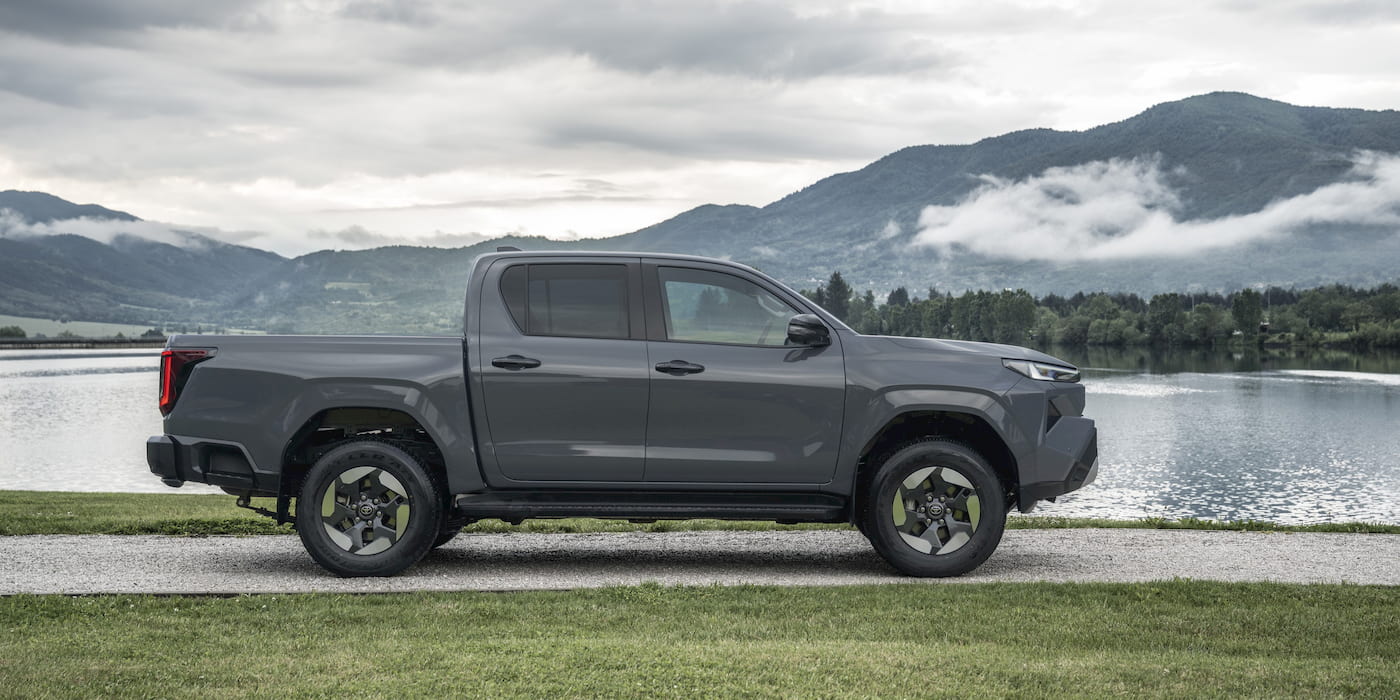
Toyota Releases Pricing for New Electric Pickup Truck Starting Under 60000 Dollars
June 12, 2026
Share
Key Takeaways
The Toyota Hilux BEV is the company's first fully electric pickup and body-on-frame electric vehicle (EV), powered by a dual motor setup delivering 278 hp and 348 lb-ft of torque, with a towing capacity of over 3,700 lbs.
The Hilux BEV features a 59.2 kWh water-cooled lithium-ion battery, providing a driving range of up to 160 miles (257 km) according to the WLTP standard, and supports DC fast-charging up to 125 kW, allowing for a 10-80% recharge in approximately 30 minutes.
The electric pickup's availability in Canada is uncertain, but if introduced, it may be eligible for the iZEV incentive program, offering up to $5,000 in rebates, with potential Canadian pricing competitive to the UK and Australian markets, around $65,000-$73,000 CAD.
Introduction to the Toyota Hilux BEV
The Toyota Hilux BEV marks a significant milestone as the company's first fully electric pickup and body-on-frame electric vehicle (EV). With over 27 million models sold worldwide in the past seven decades, the Hilux is not only Toyota's most popular pickup but also one of the best-selling pickups globally. The ninth generation of the Hilux introduces an all-electric version, taking the "legendary pickup into a new era of electrified power."
Design and Features of the Hilux BEV
The electric Hilux boasts a new design, dubbed "Tough and Agile," featuring slim LED headlights connected by a light bar and the Toyota name prominently displayed at the front. It comes in a Double Cab body style with a permanent all-wheel-drive (AWD) powertrain, powered by a dual motor setup delivering 278 hp and 348 lb-ft of torque. This enables the vehicle to tow over 3,700 lbs and navigate various terrains with ease, thanks to the Multi-Terrain Select (MTS) system and reinforced eAxles. Although the ground clearance is slightly lower due to the battery placement, the wading depth remains on par with other Hilux models at 700 mm.
Performance and Charging
The Hilux BEV is powered by a 59.2 kWh water-cooled lithium-ion battery, allowing for a driving range of up to 160 miles (257 km) according to the WLTP standard, and up to 236 miles (380 km) on the city cycle. With a DC fast-charging capacity of 125 kW, the battery can recharge from 10% to 80% in approximately 30 minutes. Inside, the cabin features Toyota's latest interior setup, including a 12.3" central infotainment screen and a 12.3" driver display with customizable layouts.
Safety Features and Availability
The Hilux BEV comes equipped with Toyota's third-gen T-Mate, offering various safety and advanced driver-assistance systems (ADAS) such as blind-spot monitoring, safe exit assist, and parking support brake. The electric power steering also enables lane assist for the first time. While the Hilux BEV is available in the UK and Australia, its availability in Canada and the US remains uncertain. If introduced in Canada, it may be eligible for the iZEV incentive program, offering up to $5,000 in rebates, as well as provincial rebates, such as those offered in British Columbia and Quebec. Canadian pricing would likely be competitive, considering the UK pricing starts at £42,170 (approximately $73,000 CAD), and Australian pricing begins at AUD $74,990 (around $65,000 CAD).