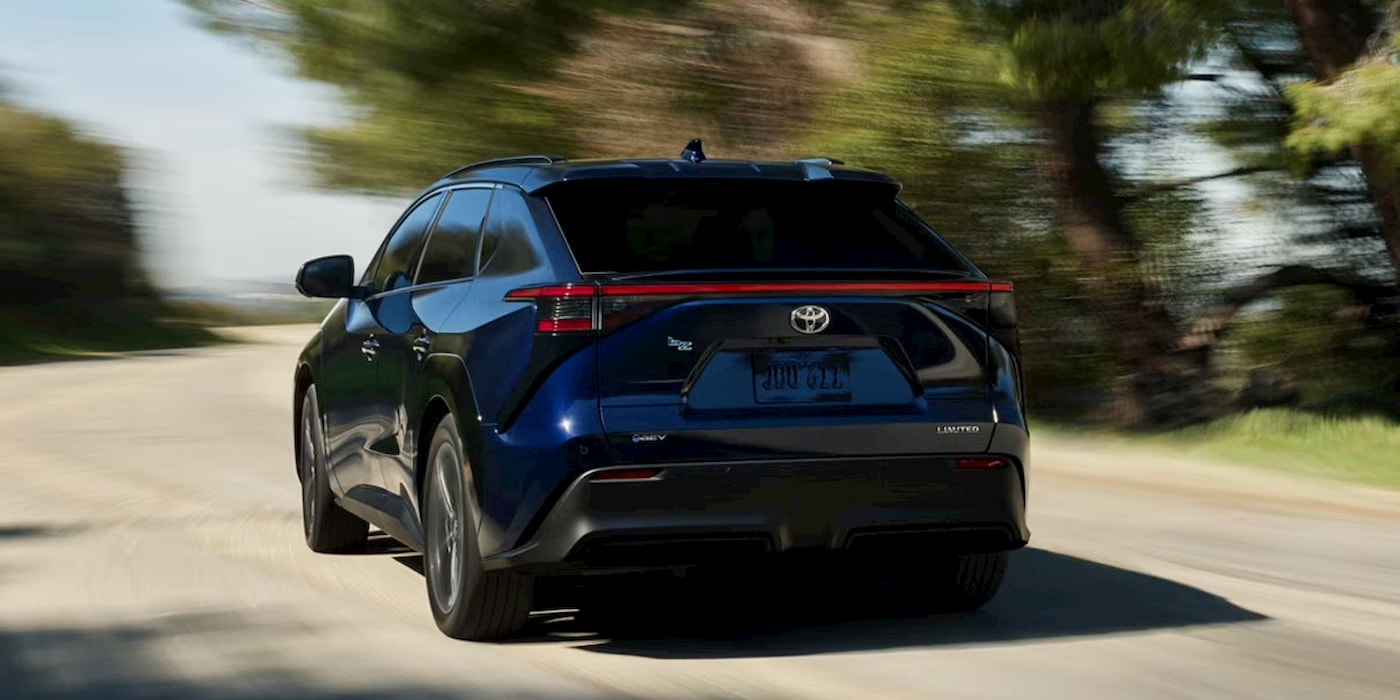
Toyota Electric SUV Ranks Third Best-Selling EV in US for Q1
April 13, 2026
Share
Key Takeaways
Toyota bZ becomes the third-best-selling EV in the US for Q1 2026, with 10,029 units sold – an 80% increase year-over-year
Tesla continues to dominate the EV market, with the Model Y and Model 3 securing the top two spots and accounting for one-third of all EV sales
Despite overall US EV sales declining 7.8% in Q1 2026, several brands including Toyota, Cadillac, Lexus, Rivian, Lucid, and Lexus saw increased sales due to new or updated models
Rising gas prices in the US are driving increased EV interest, a trend expected to continue in Canada where provincial programs like Ontario’s iZEV ($4,000) and Quebec’s RÉVE ($15,000) offer substantial rebates
EVs made up 5.8% of total new vehicle sales in the US in Q1 2026, with affordability improving due to lower prices and generous incentives from automakers
Toyota bZ Becomes Third-Best-Selling EV in Q1 2026
In the first quarter of 2026, Toyota’s electric SUV, the bZ, surged past competitors like the Hyundai IONIQ 5, Chevy Equinox EV, and Ford Mustang Mach-E to claim the title of the third-best-selling electric vehicle (EV) in the United States. This milestone highlights a shifting landscape in the EV market, even as overall EV sales in the U.S. experienced a decline.
Mixed EV Sales Performance
Despite the impressive performance of the Toyota bZ, the overall EV market in the U.S. faced challenges in Q1 2026. According to the latest sales data from Cox Automotive, a total of 216,399 EVs were sold in the first three months of the year. Although this represents a 7.8% decrease from the previous quarter, it marks an improvement over the stark 46% quarter-over-quarter drop observed in Q4 2025.
Many major automotive brands reported significant year-over-year sales declines, ranging from 60% to 70%. Companies such as Ford, Honda, Mercedes-Benz, Audi, Volkswagen, and Nissan all saw substantial drops in their EV sales. This downturn reflects the evolving nature of the EV market, which Cox Automotive describes as having “clearly entered a new chapter.”
Bright Spots in the Market
Amid the broader declines, several brands managed to buck the trend by launching new or updated models, which helped drive increased sales. Cadillac, Lexus, Rivian, Lucid, and Toyota all reported higher sales growth in Q1.
Toyota’s updated bZ electric SUV (formerly known as the bZ4X) was the standout performer, with 10,029 units sold in the first quarter—a remarkable 80% increase from the approximately 5,600 units sold in the same period last year. This surge in sales propelled the Toyota bZ to the third position in the EV sales rankings for Q1 2026.
Top-selling EVs in Q1 2026
The top EV sales chart for Q1 2026 is as follows:
1. **Tesla Model Y**: 78,591 units sold, marking a 22% increase and maintaining its lead as the best-selling EV.
2. **Tesla Model 3**: 21,672 units sold, continuing Tesla’s dominance in the market.
3. **Toyota bZ**: 10,029 units sold, climbing to third place.
4. **Hyundai IONIQ 5**: 9,790 units sold.
5. **Chevy Equinox EV**: 9,589 units sold.
6. **Rivian R1S**: 5,494 units sold.
7. **Ford Mustang Mach-E**: 4,600 units sold.
8. **Lexus RZ**: 4,456 units sold.
9. **Tesla Cybertruck**: 3,519 units sold.
10. **Cadillac Lyriq**: 3,370 units sold.
It’s noteworthy that Tesla accounted for one in three EVs sold in Q1, with the Model Y alone making up a significant portion of this market share.
Increasing Interest in EVs in Canada
As gas prices in the U.S. surge—averaging over $4.12—interest in EVs has grown, with more consumers visiting platforms like Cox Automotive’s Kelley Blue Book and Autotrader. This trend is likely to be mirrored in Canada, where drivers are also feeling the pinch of rising fuel costs.
For Canadian drivers, the landscape of EV incentives and rebates is evolving, with provincial programs such as those offered by British Columbia, Ontario, and Quebec providing substantial support. For instance, Ontario’s iZEV program offers up to $4,000 for new eligible EVs, while Quebec’s RÉVE program can provide up to $15,000 for certain models. These incentives, combined with federal rebates, make EVs increasingly affordable.
Looking Ahead
The future of the EV market will be less influenced by policy changes and more driven by the introduction of new vehicle models and competitive pricing. With EV prices trending lower and automakers continuing to offer generous incentives, affordability is becoming less of a barrier for consumers.
As a result, the EV share of new vehicle sales is expected to increase, although reaching the peak of 10% may still take some time. In Q1 2026, EVs accounted for 5.8% of total new vehicle sales in the U.S.
For Canadian consumers interested in exploring EV options, numerous reputable models are available, and various provincial and federal incentives can significantly reduce the cost. Use the links below to find popular electric vehicles nearest to you and take advantage of these opportunities to drive into a sustainable future.