Uber Starts Initial Test Rides of Lucid Gravity Robotaxis with Nuro Autonomy Technology
April 13, 2026
Share
Key Takeaways
Nuro, Uber, and Lucid Motors are developing a fleet of Gravity Robotaxi SUVs with Level 4 autonomous technology for deployment in San Francisco, with test rides currently exclusive to Uber employees.
The initial rollout plans for up to 20,000 Lucid Gravity SUVs converted into robotaxis, with expansion to dozens of global markets expected over the next six years.
Canadian drivers can benefit from provincial EV incentives such as up to $15,000 in Quebec, $5,000 in Ontario, and $4,000 in British Columbia, promoting adoption of electric and future autonomous vehicles.
The partnership marks a significant step forward in autonomous EV technology, connecting autonomy stacks, vehicle platforms and rider experience in real-world conditions.
As autonomous vehicle technology matures, Canadian provinces are likely to introduce further incentives to accelerate the adoption of self-driving electric vehicles.
Canadian Drivers Eye Future of Autonomous EV Taxis with Nuro, Uber, and Lucid Partnership
A significant advancement in autonomous vehicle technology has been unveiled by Nuro in collaboration with Uber Technologies and Lucid Motors. This partnership, initially announced in July 2025, aims to develop a fleet of Gravity Robotaxi SUVs equipped with Nuro’s Level 4 autonomous driving platform, Driver. While the current test rides are taking place in California, Canadian drivers might soon witness similar developments, given the growing interest in autonomous and electric vehicles in the country.
Initial Rollout and Test Rides
The journey began when Uber committed to deploying up to 20,000 Lucid Gravity SUVs converted into robotaxis using Nuro’s technology. The initial rollout was planned for the San Francisco Bay Area by late October. Fast forward to January, and Nuro, Uber, and Lucid Motors unveiled a production-intent version of the Gravity robotaxi, commencing road testing immediately.
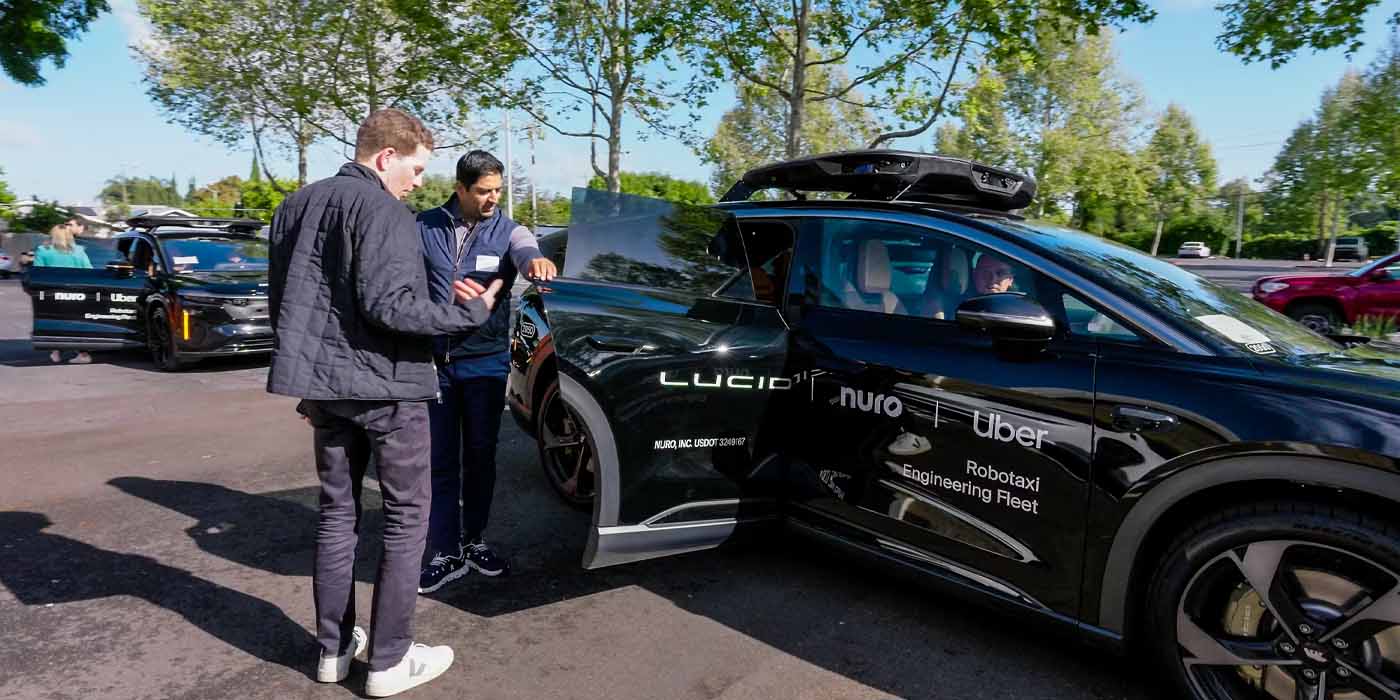
This month, Nuro announced the next phase of development: public test rides in the San Francisco Bay Area. However, these rides are currently exclusive to Uber employees. A press release from Nuro confirmed that select Uber employees have begun test rides in the Lucid Gravity robotaxis on Uber’s rideshare platform around San Francisco. This test program, which started last week, still includes a safety driver in the front seat.
Uber employees can request these Nuro-equipped Lucid Gravity vehicles directly through the rideshare app, allowing them to provide feedback and validate the rider experience before the full commercial launch. According to Nuro, this kind of testing is crucial as it connects the autonomy stack, the vehicle platform, and the rider experience in a live operating environment, enabling the teams to refine the service.
Expansion and Future Prospects for Canada
Nuro’s robotaxi engineering fleet is nearing 100 vehicles, gathering real-world data of autonomous driving across several US cities. The robotaxi fleet will initially consist entirely of Lucid Gravity SUVs, operated and maintained by Uber and its third-party partner, and will be available exclusively on the Uber app. Although the public rollout will begin in San Francisco this year, the service is expected to expand to “dozens of global markets” over the next six years.
Canadian Context and Incentives
For Canadian drivers, this development is particularly exciting given the country’s growing focus on electric and autonomous vehicles. While the current tests are in the United States, it is plausible that similar partnerships and rollouts could occur in Canada in the near future.
Canadian drivers can benefit from various incentives to adopt electric vehicles. The iZEV (Inflation Reduction Act Zero Emission Vehicle) program offers federal and provincial rebates that can significantly reduce the cost of purchasing an EV. For instance, Ontario offers up to $5,000 off an EV purchase, British Columbia provides a rebate of up to $4,000, and Quebec offers one of the most generous rebates in Canada at up to $15,000.
Additionally, many Canadian provinces have implemented carbon pricing and other green initiatives that make operating an EV more economical. As autonomous vehicle technology matures, it is likely that Canadian provinces will introduce further incentives to promote the adoption of self-driving EVs.
Looking Ahead
While Canadian drivers will have to wait to experience the Gravity Robotaxi firsthand, the progress made by Nuro, Uber, and Lucid Motors indicates a promising future for autonomous EV taxis globally. With Canada’s supportive policies and growing interest in sustainable transportation, it won’t be long before Canadians can hail their own self-driving electric taxis.