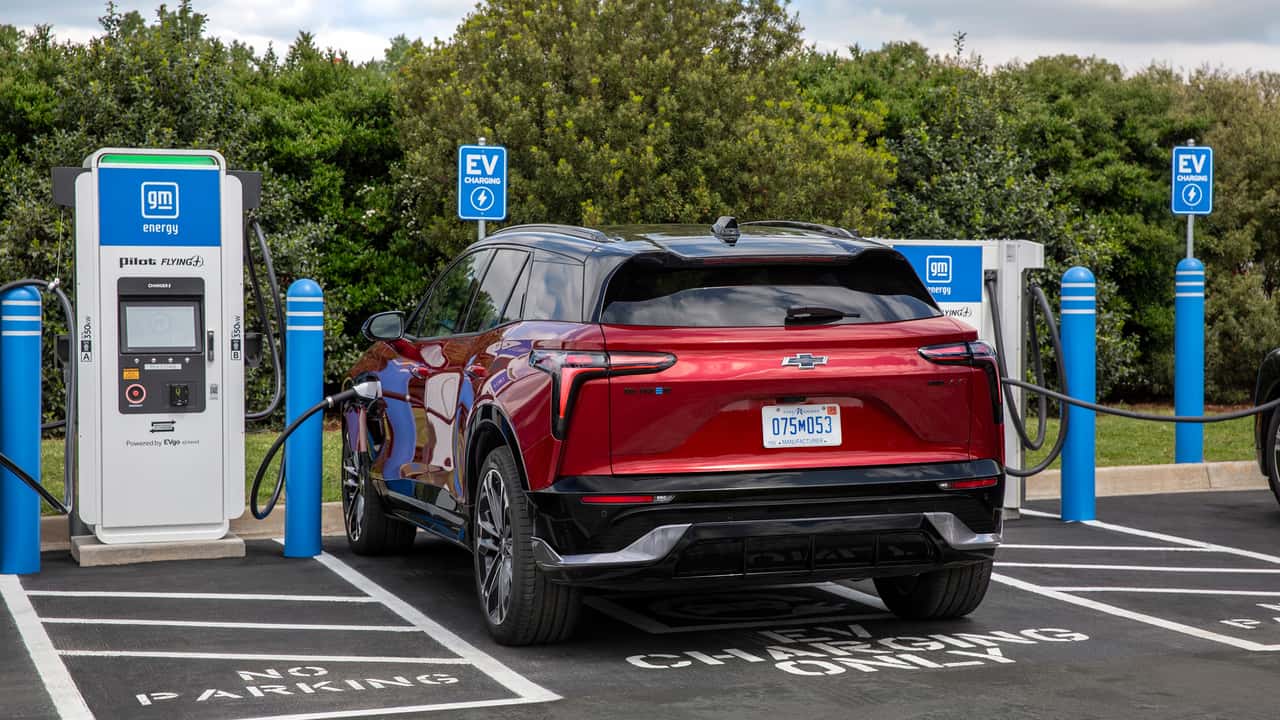
US Electric Vehicle Charging Stations Reach New High
June 15, 2026
Share
Key Takeaways
The number of public electric vehicle (EV) charging ports in North America is growing rapidly, with over 250,000 public EV charging ports in the US and significant investment in EV charging infrastructure in Canada, including DC fast chargers and Level 2 plugs.
Canadian pricing for EV charging varies, but many networks offer competitive rates, and with government incentives like the iZEV program offering up to $5,000 in rebates, owning and operating an electric vehicle is becoming more affordable for Canadians.
Industry leaders like Tesla, Ionna, and Rivian are expanding their EV charging networks in Canada, with thousands of new DC fast chargers and Level 2 chargers being installed, making long-distance electric vehicle travel more convenient and reliable.
Electric Vehicle Charging Infrastructure Expanding in North America
A perceived lack of electric vehicle (EV) charging options is often cited as a major barrier to adoption in Canada and the United States. However, the reality is that the number of public EV charging ports is growing rapidly. In the US, there are now over 250,000 public EV charging ports, with more than 180,000 Level 2 plugs and over 73,000 DC fast chargers. While Canada's numbers are not as high, the country is still seeing significant investment in EV charging infrastructure, with many new charging stations being installed along highways and in urban centres.
Rapid Expansion of EV Charging Infrastructure
The expansion of EV charging infrastructure is crucial for boosting the uptake of electric cars in Canada. With the Canadian government offering incentives such as the iZEV program, which provides a rebate of up to $5,000 for the purchase of an eligible EV, and provincial rebates, such as those offered in British Columbia and Quebec, there is a growing demand for convenient and reliable charging options. The installation of DC fast chargers, which can charge a battery to 80% in under 30 minutes, is particularly important for long-distance travel, while Level 2 chargers are well-suited for charging at home, at work, or in public parking lots. Canadian pricing for EV charging varies, but many networks offer competitive rates, making it more affordable for Canadians to own and operate an electric vehicle.
Industry Leaders in EV Charging
Tesla leads the industry in fast-charger deployments, with a vast network of Superchargers across North America, including many locations in Canada. Other companies, such as Ionna and Rivian, are also rapidly expanding their charging networks, with Ionna having 120 locations with over 1,130 DC charging points and Rivian's Adventure Network including 149 stations with over 1,000 DC chargers. ChargePoint has the most Level 2 chargers of any network, with over 76,000 plugs across the US and a growing presence in Canada. As the Canadian market continues to grow, with many new EV models becoming available, including the 2026 Mercedes CLA EV, the need for convenient and reliable charging options will only continue to increase.
Future of EV Charging in Canada
As the EV market continues to evolve, it's likely that we'll see even more investment in EV charging infrastructure across Canada. With companies like BYD planning to bring thousands of 5-minute EV chargers to Canada, the future of EV charging is looking bright. As Canadians become more comfortable with the idea of owning an electric vehicle, the demand for charging options will only continue to grow, driving innovation and investment in the industry. With the Canadian government's commitment to reducing greenhouse gas emissions and promoting the adoption of electric vehicles, the centre of the EV charging industry is likely to shift towards more sustainable and efficient solutions, making it easier for Canadians to make the switch to an electric vehicle and travel long distances, such as a kilometre or more, without worrying about running out of charge.