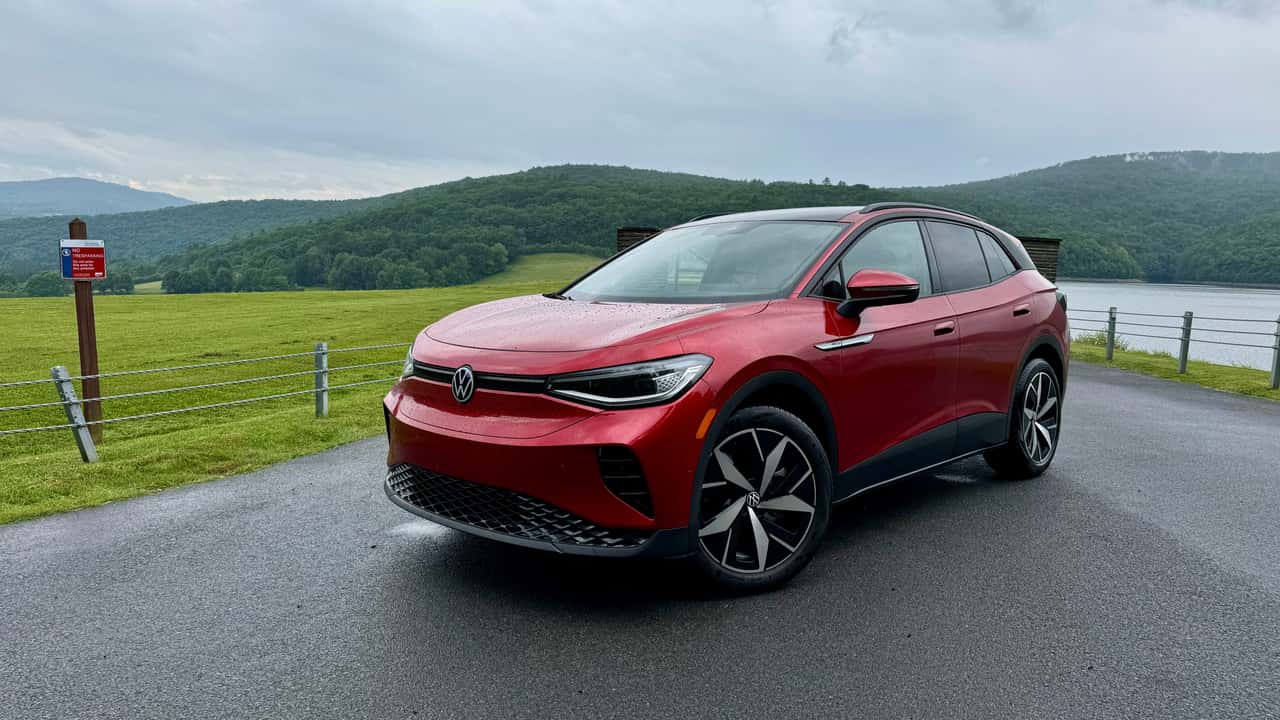
Volkswagen Ends US ID.4 Production Shifting Plant to Gas SUVs
April 9, 2026
Share
Key Takeaways
Volkswagen ends ID.4 electric crossover production in the U.S. by mid-April 2026, shifting focus to more profitable gas-powered 2027 Atlas SUVs
Despite a 31.4% sales increase to 22,373 units in 2025, the ID.4 struggled in the U.S. market due to lost federal tax credits, production halts, and software issues
Volkswagen plans to keep the ID.4 available in the U.S. through existing inventory into 2027, with a future version planned for North America
The decision reflects broader EV market challenges and Volkswagen's strategy to prioritize higher-volume, profitable models
For Canadian EV buyers, the ID.4 remains available with provincial and federal iZEV incentives, while Volkswagen prepares future electric models
Volkswagen Ends Production of ID.4 in the U.S., Shifts Focus to Gas-Powered Models
Volkswagen has officially confirmed the end of ID.4 production in the United States. The electric crossover will cease being assembled at the Chattanooga, Tennessee plant within the next few weeks. This move comes as the facility increases production of the gas-powered 2027 Atlas and Atlas Cross Sport.
Market Challenges and Strategic Shifts
"The EV market continues to challenge the industry, requiring measured decisions throughout the last few years to navigate this unpredictability," Volkswagen stated. "As part of the focus toward higher-volume products that meet market demand, Volkswagen will no longer assemble the ID.4 in Chattanooga starting mid-April 2026."
This decision isn't surprising, especially considering the current economic climate and trade policies affecting the automotive industry in North America. The Chattanooga plant is Volkswagen's sole assembly facility in the United States. The company faced significant financial pressures last year, with profits dropping 53% and U.S. sales declining by 13% due to high tariffs and trade wars. To maximise profit, Volkswagen is implementing cost-cutting measures globally.
Profitability and Market Demand
In today's market, larger gas SUVs prove to be more profitable than compact electric crossovers. This financial reality drives Volkswagen's decision to prioritise the 2027 Atlas. The Atlas, already produced in Chattanooga, will now utilise the plant's full capacity. In 2023 alone, the plant manufactured over 175,000 vehicles annually. The combined sales of the Atlas and Atlas Cross Sport exceed 100,000 units, far surpassing the ID.4's sales figures.
ID.4 Sales and Issues
Last year, Volkswagen sold 22,373 ID.4 vehicles, marking a 31.4% increase from 2024. However, 2024 sales were impacted by a stop-sale order due to a door handle design issue, which halted deliveries for most of the year. The ID.4 also faced early challenges with software and drive motor problems.
Despite these setbacks, the ID.4 was a stylish and enjoyable-to-drive option when it debuted in 2021 during a period of EV optimism. Globally, it achieved success with hundreds of thousands of units sold. However, it struggled in the U.S. market, especially after losing its federal tax credit in the fall of 2025. By Q4 of 2025, sales plummeted to just 248 units.
Future of the ID.4 and Volkswagen's EV Strategy in North America
Although the current ID.4 production will end, the vehicle will remain available in the U.S. through existing inventory, expected to meet customer demand into 2027. Volkswagen also plans to introduce a future version of the ID.4 for the North American market, although details will be announced at a later date.
This shift leaves Volkswagen's U.S. EV lineup in a transitional phase. The VW ID. Buzz will skip the 2026 model year, reportedly returning in 2027. Enough 2025 models are said to be available to cover demand until then. The current ID.4 will no longer be available beyond its existing stock, and Volkswagen does not plan to import a version from other plants.
A New Chapter for Volkswagen's EVs
While the end of the ID.4 is disappointing, it may pave the way for Volkswagen's next generation of EVs. The company aims to introduce models with more physical buttons, enhanced designs, and improved software derived from its partnership with Rivian.
There is still excitement for Volkswagen's future in the EV market. The brand appears to be on the right track, focusing on creating a new generation of more affordable and appealing electric vehicles. For this vision to succeed, many of today's existing models will need to be phased out.
Canadian Context
While this news focuses on the U.S. market, it has implications for Canadian Volkswagen owners and potential buyers. Currently, the ID.4 is available in Canada, and consumers can still benefit from various provincial rebates and federal iZEV incentives that make electric vehicle ownership more affordable. Canadians should stay informed about future models and potential updates from Volkswagen, as the brand continues to navigate the evolving EV landscape.
Canadians looking for electric SUV options might also consider other available EVs in the market, some of which may offer competitive pricing and incentives. As Volkswagen strategises for the future, Canadian consumers can expect announcements regarding new models and possibly enhanced incentive programs aligned with Canada's broader push towards electrification and sustainability.