Apr 9, 2026
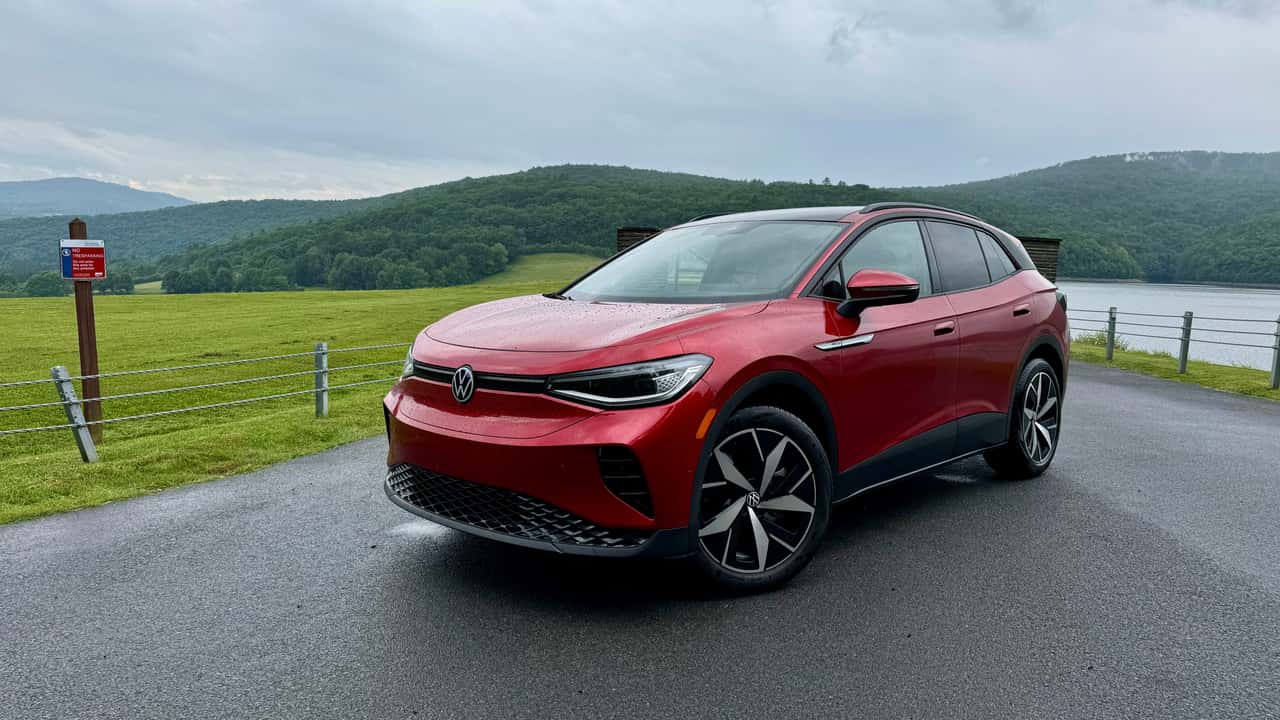
Volkswagen Ends US ID.4 Production Shifting Plant to Gas SUVs
Volkswagen ends ID.4 electric crossover production in the U.S. by mid-April 2026, shifting focus to more profitable gas-powered 2027 Atlas SUVs. Despite a 31.4% sales increase to 22,373 units in 2025, the ID.4 struggled in the U.S. market due to lost federal tax credits, production halts, and software issues. Volkswagen plans to keep the ID.4 available in the U.S. through existing inventory into 2027, with a future version planned for North America. The decision reflects broader EV market challenges and Volkswagen's strategy to prioritize higher-volume, profitable models. For Canadian EV buyers, the ID.4 remains available with provincial and federal iZEV incentives, while Volkswagen prepares future electric models.

Apr 9, 2026
Tesla Unveils Compact Electric SUV Rivaling Chevy Bolt in Affordability Report
Tesla is developing a new compact electric SUV, approximately 4.28 metres long, aimed at offering more affordable EV options for Canadian consumers.. The vehicle, featuring a smaller battery and single motor, could undercut current Tesla models, potentially starting below competitor prices like the Chevy Bolt and Nissan Leaf.. Canadian buyers may benefit from substantial provincial and federal incentives, with rebates up to $5,000 available in provinces like Ontario, Alberta, and Quebec, significantly lowering the effective price.. Production will initially occur at Tesla’s Gigafactory Shanghai, with future expansion to the U.S. and Europe, and may include autonomous robotaxi capabilities.. Despite cautious optimism due to Tesla's history of project delays, this affordable model could be crucial for Tesla to compete in the rapidly evolving global and Canadian EV markets.

Apr 9, 2026
Top Affordable Electric Vehicle Launching in Europe 2026
The Cupra Raval, built on Volkswagen Group's MEB+ platform, debuts as a sporty, affordable electric hatchback for Canadian drivers, promising engaging driving dynamics and competitive pricing.. The Raval comes in three variants: the 114-horsepower Raval Origin with a 37-kWh LFP battery offering ~300 km range, the 222-hp Raval VZ with a 52-kWh NMC battery providing ~400 km range and a 0-100 km/h time of 6.8 seconds, and the balanced 208-hp Raval Endurance with up to 450 km range.. With a starting price of approximately $30,400 CAD, the Cupra Raval is slightly more expensive than its competitor, the Renault 5, but Canadian provincial EV incentives such as Ontario’s $4,000 rebate, British Columbia’s $3,500 rebate, and Quebec’s $4,000 RÉVE program can significantly lower the effective cost for buyers.

Apr 9, 2026
Polestar Records Strongest First Quarter Performance Ever
Polestar reported record-breaking global sales of approximately 13,126 vehicles in Q1 2025, marking a 7% year-over-year increase, driven by strong performance in key markets and generous discounts.. The luxury Polestar 3 electric SUV, currently in production in the U.S., will arrive in Canadian showrooms later this year with a starting price just under $150,000 before incentives.. Polestar is expanding its Canadian dealership network, with the brand now available in major cities like Toronto, Vancouver, Montreal, and Calgary, and aiming for approximately 250 global sales points by the end of the year—a 20% increase from 2025.. Canadian EV buyers can benefit from federal and provincial incentives, such as the federal iZEV program offering up to $4,000 off, with additional rebates in provinces like Ontario and British Columbia.. Polestar plans to broaden its product portfolio by introducing the Polestar 5 grand touring sports car and a station wagon version of the Polestar 4 by the end of 2026, followed by the Polestar 2 sedan and Polestar 7 compact SUV in 2028.
Apr 8, 2026
Canadian Clean Fleet Awards Honor Eco-Friendly Business Leaders
Electric Autonomy Canada and the Pembina Institute have launched the Canadian Clean Fleet Awards to recognise leaders in zero-emission transportation across Canada. The awards celebrate excellence in EV fleet adoption across six categories, including large and small fleet operators, public and private sectors, innovation, and community impact. Provincial and federal incentives in Canada, such as Ontario’s iZEV program and Quebec’s RÉVE, help reduce upfront EV costs for fleet operators. Benefits of zero-emission fleets include lower operating costs, improved air quality, enhanced public image, and compliance with emissions regulations. Fleet operators can nominate their organisations through the Electric Autonomy Canada website, showcasing their EV adoption and sustainability achievements.
Apr 8, 2026
kWh Summit V2G Technology Collaboration Needed for Success
V2G technology allows EVs to supply power back to the grid, enhancing grid stability and supporting renewable energy integration in Canada.. Collaboration among utilities, manufacturers, policymakers, and consumers is crucial to fully realize V2G potential in the Canadian market.. Canadian EV models like the Nissan Leaf and Chevrolet Bolt EV offer V2G capabilities, with federal and provincial incentives such as the iZEV program reducing upfront costs by up to CAD 7,000.

Apr 7, 2026
Used Electric Vehicles Sales Reach New Record with Bigger Surge Ahead
Used EV sales in Canada surged to a record high in Q1 2024, with nearly 37,000 EVs sold through Manheim's wholesale auctions and over 100,000 sold at retail. Year-over-year growth reached 12%, driven by rising fuel prices, increased off-lease supply, and provincial incentives like Ontario’s $4,000 iZEV rebate, BC’s $3,500 rebate, and Quebec’s RÉVE program. Economic factors such as lower operating costs and reduced fuel expenses are the primary motivators for Canadian buyers choosing used EVs over new models.
Apr 7, 2026
SWTCH Tap Solves Public Cellular Charging Concerns
SWTCH Tap introduces near-field communications (NFC) technology for EV charging, eliminating the need for app access or cellular signals.. The system is compatible with popular Canadian EVs like the Nissan Leaf, Ford Mustang Mach-E, and Chevrolet Bolt EV.. Canadian EV owners can benefit from federal and provincial incentives, such as up to $15,000 through Quebec’s Rebate on Zero-Emission Vehicles Program, to offset the cost of new EV technologies.. SWTCH Tap is currently rolling out across Canada, with installations planned for numerous charging stations operated by major utility companies and private networks.. This innovation aims to enhance the EV charging experience in Canada, supporting national goals of increased EV adoption and reduced greenhouse gas emissions.
Apr 7, 2026
Autel and ChargeLab Partner to Develop Comprehensive EV Charging Solutions
Autel and ChargeLab have partnered to deliver fully integrated EV charging systems in Canada, featuring a user-friendly Centralised Site Management System (CSMS) for easy setup and management.. The charger units are specifically designed to withstand Canada’s extreme weather conditions, ensuring reliable year-round performance.. Canadian site hosts can benefit from various national and provincial incentives, such as the iZEV program and provincial rebates, making EV charger installation more affordable.. Autel and ChargeLab’s EV charging systems are now available across Canada, supporting the nation’s growing electric vehicle market and demand for sustainable transportation.. Key SEO terms include “EV charging systems Canada,” “Autel EV chargers,” and “Canadian EV incentives” to optimise visibility for Canadian businesses and municipalities.
Apr 2, 2026
Stellantis Plans to Assemble Leapmotor Electric Vehicles at Closed Canadian Facility
Stellantis is considering assembling Leapmotor EVs at its idle Brampton, Ontario plant using knock-down kits from China. The proposal faces strong opposition from Ontario Premier Doug Ford and Unifor over concerns of minimal job creation and exclusion of Canadian suppliers. Canadian government had previously invested over $529 million in subsidies for the Brampton facility, which remains closed since Stellantis moved Jeep Compass production to Illinois in 2025.
Apr 2, 2026
British Columbia Revises 2035 Zero-Emission Vehicle Sales Goal to 75 Percent
British Columbia has adjusted its Zero-Emission Vehicles (ZEV) Act, lowering the mandatory sales target to 75% by 2035 to align with federal guidelines. The province will receive $19.1 million in federal funding to expand EV charging infrastructure, especially in rural and remote areas. Canadian EV buyers can benefit from up to $4,000 through the federal iZEV Program and an additional $1,400 via British Columbia’s Live Smart BC rebate. The Canadian EV market is expanding with more models from brands like Ford, Volkswagen, Nissan, and Tesla, offering consumers greater choices. Enhanced infrastructure and supportive policies position Canada to meet its EV goals and support a sustainable electric mobility future.
Mar 27, 2026
EV Sales Decline 28% in Q1 2026 While Used EVs Rise 12% Near Record Highs
New EV sales in Canada have declined, influenced by changes in federal and provincial incentives, similar to a 28% drop in the US market.. The used EV market in Canada is booming, with vehicles now priced closer to used internal combustion engine cars, offering budget-friendly options.. Provincial incentives like Ontario's Drive Clean, British Columbia's EVIP, and Quebec's REVQ are key in making EVs more affordable for Canadian consumers.. Hybrid and plug-in hybrid electric vehicles are gaining popularity in Canada, especially from brands like Toyota and Honda, due to their flexibility and fuel efficiency.. Despite a cautious outlook for 2026, the used EV market is expected to grow, driven by increased supply from leased EVs and competitive pricing.